
Fast, Reliable Spray Foam Insulation Across Whittier
Spray foam insulation in Whittier costs between $2.50 and $6.50 per board foot installed, with most retrofits on older homes running $1,800 to $5,400 depending on attic depth, rim joist count, and whether we’re air-sealing around legacy wiring. We dispatch crews to Whittier from North Tustin weekly, covering ZIPs 90601 through 90606, and we know exactly what your 1940s Spanish-revival or 1950s tract home needs before we climb into the attic. If you’re tired of rooms that cook by 2 p.m. and a cooling bill that climbs every August, call (877) 265-5712 for a free estimate.
Why North Tustin Insulation Is Whittier’s Preferred Spray Foam Insulation Company
Whittier homeowners call us because we carry both Icynene and Demilec spray foam systems and we’re not pushing one material on every house. Most insulation contractors in the East LA basin sell whatever their crew knows. We stock eight major brands across fiberglass, mineral wool, cellulose, and spray foam, so the recommendation comes from your attic’s actual condition, not our inventory. Allen Decker built North Tustin Insulation around that principle: match the material to the home, not the other way around.
Our technicians have crawled through attics across Whittier, from the bungalows off Philadelphia Street to the post-war tracts near Michigan Park. We understand the framing, the shallow joist bays, the knob-and-tube wiring that still snakes through pre-1950 cavities. That local familiarity means fewer surprises mid-project and firmer quotes upfront. Call (877) 265-5712 and you’ll talk to someone who knows the difference between spray foaming a rim joist in a 1930s cottage and a 1990s addition.
Rim Joist Spray Foam in Whittier
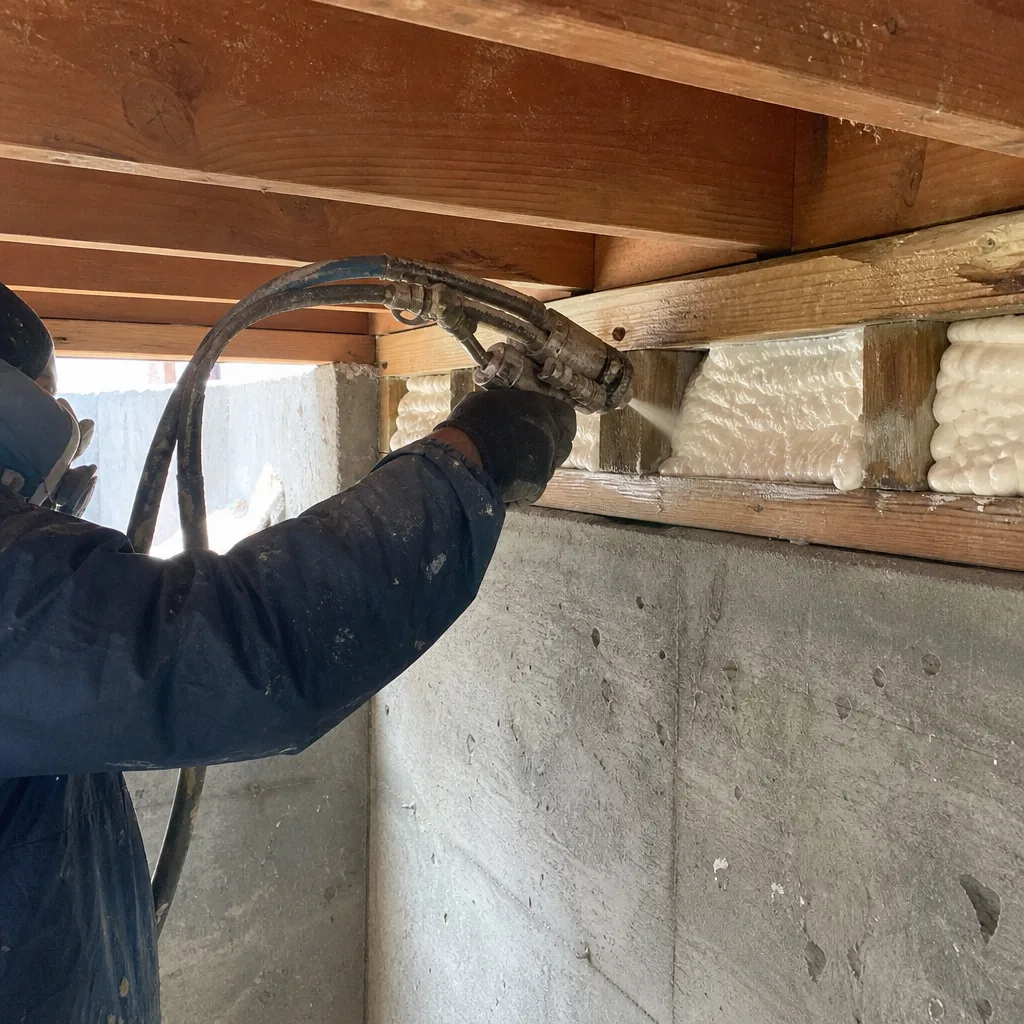
Rim joist spray foam in Whittier addresses one of the most overlooked air leaks in older single-story homes: the band board where floor framing meets the foundation. In homes built between 1920 and 1960, that rim joist was rarely sealed and never insulated. The result is a steady pull of outside air into the floor system, which makes rooms drafty, invites dust and pests, and drags down whatever you’re spending on air conditioning. We spray closed-cell foam directly against the rim board to seal it, then run an open-cell or closed-cell fill depending on the cavity depth. A typical Whittier crawl space with eight to twelve rim joist bays runs $900 to $1,800.
Sealing Around Legacy Wiring
Pre-1950 Whittier homes often have live knob-and-tube wiring running through the rim joist area. We don’t spray over it blindly. Our crews identify the circuit paths, maintain required clearances, and foam around the wiring rather than encasing it. That keeps the work code-compliant and keeps your insurance company out of the conversation later.
When Rim Joists Matter Most
If you can feel a floor-level draft on winter mornings, or if you’ve noticed a persistent musty smell near baseboards, your rim joists are the likely culprit. Closed-cell spray foam also acts as a vapor retarder, which helps in Whittier’s summer-humid crawl spaces where the marine layer lingers overnight before burning off late morning.
Crawl Space Spray Foam Insulation in Whittier
Crawl space spray foam insulation in Whittier is usually the right call for raised-foundation homes with exposed floor framing and ductwork running through the crawl. Many of the 1920s through early-1960s stucco bungalows across 90601, 90603, and 90605 sit on raised foundations with nothing between the dirt and the subfloor except a few loose batts that have sagged and failed. We spray the crawl space ceiling or the perimeter walls, depending on whether the space is vented or sealed. A standard 900 to 1,200 square foot crawl space treatment in Whittier typically runs $2,200 to $4,800.
Venting Versus Sealing
Whittier’s humidity profile changes the calculation. In summer, the marine layer keeps mornings damp, and a vented crawl space pulls that moisture straight under the house. If you’re sealing the crawl space with closed-cell foam, we address drainage and vapor control first. Skipping that step traps moisture and accelerates rot in the very joists you’re trying to protect.
The Rodent and Air-Seal Bonus
Closed-cell spray foam doesn’t just insulate; it blocks the gaps rodents and spiders use to get under the house. For Whittier homes near the hills or Greenway Trail, that’s a real benefit. Homeowners who spray the rim joists and crawl space perimeter often report fewer pests and noticeably warmer floors within a week.
Trusted Brands We Service in Whittier
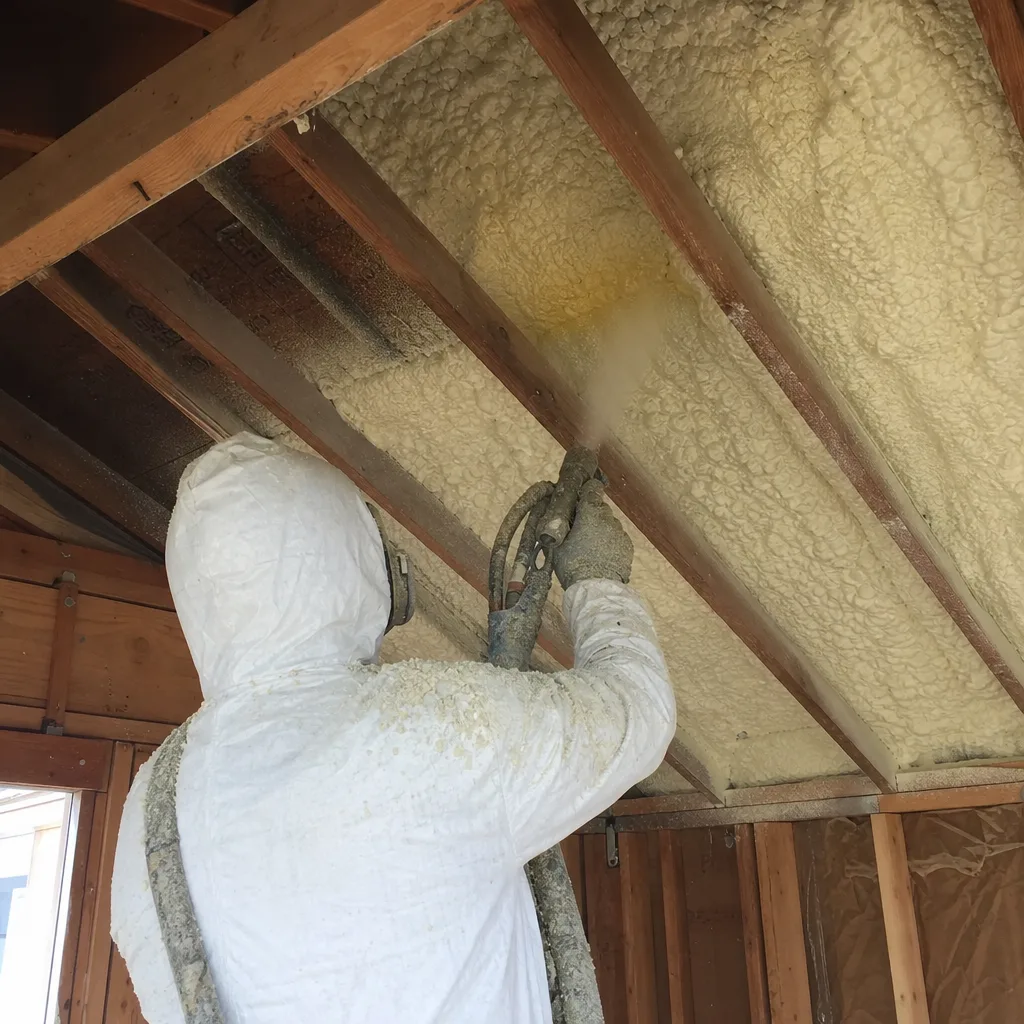
We install Spray Foam Insulation using Icynene and Demilec systems, and we’re certified through both manufacturers. For homeowners weighing spray foam against other materials, we also carry Owens Corning and Johns Manville products. That matters because not every Whittier attic should get spray foam. Some shallow 2×4 cavities are better served by blown-in or batt. Carrying eight brands means we can tell you honestly when spray foam is the wrong choice and what to use instead. We keep material staged for Whittier jobs, so scheduling doesn’t stall waiting on product.
Common Spray Foam Insulation Problems We See in Whittier Homes
- Foam sprayed over settled or contaminated fiberglass in shallow attics. Whittier’s older homes often have decades of dust, rodent droppings, and compacted batts in the attic. Foam applied over that mess won’t bond. We remove or clean the substrate first, which is the step lots of low-bid crews skip.
- Ignoring live knob-and-tube wiring during rim joist spraying. This is the most common code and fire-safety violation in pre-1950 Whittier homes. We map the wiring, maintain clearance, and document the work. Rushing this creates a real fire risk.
- Using closed-cell foam in crawl spaces without addressing summer humidity. Whittier’s overnight marine layer means crawl spaces sit damp for hours every morning. Closed-cell foam traps that moisture if the perimeter isn’t prepped properly. We check drainage and vapor conditions before spraying.
- One-coat shortcuts on irregular joist bays. Whittier’s older framing isn’t square or uniform. Single-pass spray jobs leave voids and air channels. We re-pass problem areas and use a thermal camera on the finish inspection to confirm coverage.
Pricing for Spray Foam Insulation in Whittier, CA
Here’s what you can expect to pay in Whittier. Rim joist spray foam on a typical 1920s-1950s raised foundation: $900 to $1,800. Crawl space perimeter or ceiling foam on a 1,000 square foot home: $2,200 to $4,800. Full attic air-seal plus open-cell spray foam on a 900 square foot attic: $2,800 to $5,400. Closed-cell runs higher per board foot but delivers a higher R-value per inch, which matters in Whittier’s shallow 2×4 attic bays where space is tight. The biggest cost variables are prep work around knob-and-tube wiring, how much old insulation has to be removed, and access. Every quote is line-item. No allowances, no “we’ll figure it out later.” Call (877) 265-5712 and we’ll walk your attic, measure, and give you real numbers on the spot.
We Also Serve Cities Near Whittier
Our crews work across the East LA County basin, so if you’re in South Whittier, West Whittier-Los Nietos, East La Mirada, or Santa Fe Springs, the same Whittier crew can handle your project. We batch scheduling across these cities to keep drive time down and response times short. Call (877) 265-5712 and tell us which city you’re in.
Serving Whittier, CA — Our Local Coverage Area
We’re based in the Whittier area and know this community well. Use the map below to see our service coverage — if you’re nearby, we can almost certainly help.
FAQs About Spray Foam Insulation in Whittier
Yes, and we do it regularly. The key is not encasing the wiring. We identify active circuits, maintain manufacturer-required clearance from the hot conductors, and use spray foam to air-seal around the wiring path rather than burying it. If the wiring is brittle or damaged, we’ll tell you to have an electrician address that first. Call (877) 265-5712 and we’ll inspect before quoting.
Spray foam seals air leaks, not just fills space. In a shallow Whittier attic with 2×4 or 2×6 joist bays, blown cellulose compacts and settles, leaving uninsulated channels along the eaves. Open-cell spray foam expands into the irregular bays, bonds to the deck, and stops the air movement that drives most of your summer heat gain. For bungalows with settled cellulose already in place, we often remove it, air-seal, and spray.
Spray foam reduces radiant heat transfer through the roof deck better than fiberglass batts or settled cellulose, because it creates a continuous air seal plus insulation in one layer. In Whittier, where attic temperatures can hit 130 degrees by mid-afternoon in August, that air seal is the difference between a bedroom that holds 78 degrees and one that climbs to 85 by 3 p.m.
We do. Most pre-1960 Whittier homes sit on raised foundations, and the crawl space is usually the biggest source of floor drafts and moisture. We spray either the subfloor from below or the perimeter walls if you’re converting to a sealed crawl space. Cost depends on square footage and existing moisture conditions. Call (877) 265-5712 for a free crawl space inspection and firm quote.
We install Icynene and Demilec spray foam. Icynene open-cell is common for attic roof decks and rim joists in older homes. Demilec closed-cell is our go-to for crawl space perimeter walls and any area needing a vapor retarder. We pick the product based on your home’s framing, wiring, and moisture profile. Both are fully warrantied through the manufacturer when installed by a certified applicator like North Tustin Insulation.
Written by Allen Decker, Owner at North Tustin Insulation, serving Whittier and surrounding communities.