Fast, Reliable Attic Insulation Across Calimesa
Attic insulation in Calimesa usually costs between $1,800 and $4,600 for a full retrofit of a typical 1,200 to 2,000 square foot ranch home, and most jobs are completed within a single day. That’s the range we quote here consistently, because we know the housing stock in Calimesa: 1970s through 1990s tract homes off Calimesa Boulevard and County Line Road where original R-19 batts have settled, compressed, and stopped doing their job. If your upstairs rooms run 10 degrees hotter than the rest of the house and your AC runs nonstop from June through September, you’re not imagining it. Call (877) 265-5712 and we’ll come out, get in the attic, and tell you exactly what’s going on.
Why North Tustin Insulation Is Calimesa’s Preferred Attic Insulation Company
Allen Decker built North Tustin Insulation around a simple premise: insulation is its own trade, not a side job for a roofing crew or a general contractor. That’s why every crew member who works in Calimesa focuses exclusively on attic performance, from ridge vents and baffles to blown-in depth and air sealing. We carry eight nationally recognized brands, including Demilec and GreenFiber, so when we recommend a material for your Calimesa home, it’s because the house called for it, not because it’s the only product on the truck.
Calimesa homeowners deal with something the rest of the Inland Empire doesn’t: the pass. You sit where the San Bernardino Valley funnels into the desert, and your attic feels every bit of that geography. Temperatures up there swing 30 to 40 degrees between 3 p.m. and 3 a.m., and a single-batt, unsealed attic simply cannot keep up. We’ve worked on homes from Singleton Heights down to the flatter lots near the I-10, and the same pattern repeats: compressed fiberglass, unsealed top plates, and ductwork baking in 140-degree afternoon heat. We know what to do with all three.
Our Calimesa customers call us because they want a straight answer on insulation type, depth, and cost. Not a three-bid guessing game. One crew, one trade, and a recommendation we’d put in our own attic.
Attic Ventilation in Calimesa
Attic Ventilation in Calimesa matters more than in Redlands or Yucaipa because your homes sit in the path of a daily temperature reversal that traps superheated air inside attic cavities after sunset. Without proper intake at the soffits and exhaust at or near the ridge, that heat drives down into living spaces and keeps your AC cycling until midnight. We see it most often in 1970s and 80s ranchers where original roof vents are too small and soffit vents are painted over or blocked by old insulation.
The fix usually runs $600 to $1,400 on a typical Calimesa single-story, depending on whether we’re adding baffles, ridge vent, or a powered attic fan. For homes on the south-facing slopes above Calimesa Boulevard, this is almost always the first upgrade we recommend, before adding more insulation. Ventilation is about protecting what you already have.
Ridge and Soffit Systems
A balanced system moves air the way Calimesa’s climate demands: cool air pulls in low, hot air exhausts high. On ranch homes with low-slope roofs, we’ll often pair open-cell spray foam at the roofline with continuous ridge vent to keep the attic temperature within a few degrees of ambient. That’s the difference between an attic that breathes and one that cooks.
Baffle Repairs and Air Sealing Prep
Most Calimesa attics we enter have insulation piled against the roof deck, choking off the only intake path. We repair and install baffles in every bay before we blow in anything new. If the attic can’t pull air from the soffit, no amount of R-value fixes the afternoon heat load.
Radiant Barrier in Calimesa
Radiant Barrier in Calimesa is not a luxury add-on. On any home south of Calimesa Boulevard, the roof deck takes direct sun from roughly 9 a.m. until the sun drops behind the hills, and radiant heat doesn’t care how thick your fiberglass is. A properly installed radiant barrier stapled to the underside of the roof sheathing drops attic temperatures 20 to 30 degrees in late afternoon, and that translates to less heat straining your ductwork and less heat bleeding into the rooms below.
For a standard 1,500 square foot attic, radiant barrier installation in Calimesa runs $1,200 to $2,800. We usually pair it with air sealing and a top-up of blown-in insulation, because radiant barrier alone doesn’t fix air leaks. But as a heat-load reduction layer, nothing works faster on a south-facing Calimesa slope.
South-Slope Performance
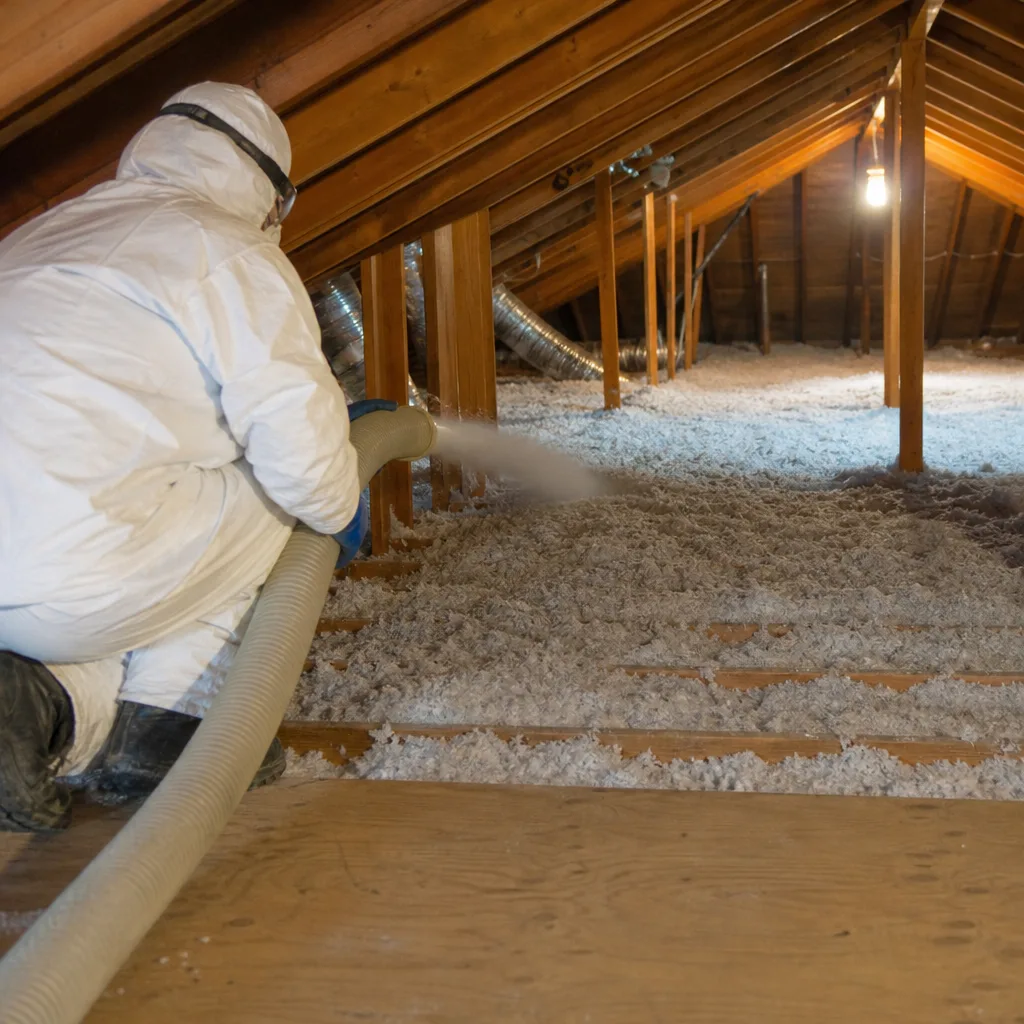
We recently re-insulated an attic in a 1980s ranch off Calimesa Boulevard where the original R-19 batts had been compressed by a 1990s HVAC retrofit, leaving the south-facing slope hitting 140 degrees and baking the ductwork. After air-sealing the top plates and knee walls, we installed a radiant barrier and blew in GreenFiber cellulose with fire retardant to R-38. The afternoon heat gain dropped hard, and the rooms on that side of the house stopped spiking at 4 p.m.
Radiant Barrier with Cellulose or Spray Foam
Some homes don’t need a radiant barrier if we’re sealing the attic with Demilec closed-cell foam, but most Calimesa attics with existing ductwork benefit from the barrier as a first line of defense. The goal is simple: keep heat from entering the attic cavity in the first place, so whatever insulation you have can do its actual job.
Trusted Brands We Service in Calimesa
We don’t push one brand. We carry what works for each home. In Calimesa, that usually means GreenFiber cellulose for blown-in retrofits over compressed batt, Owens Corning or Johns Manville fiberglass where depth and cost are the priority, and Demilec spray foam for vaulted ceilings, exposed rafters, and attic conversions. Because we stock materials for Calimesa’s specific housing stock, we can often schedule the job days faster than a contractor ordering from a single supplier. When you call for an estimate, we’ll tell you which brand and method fits your house and why, in plain terms.
Common Attic Insulation Problems We See in Calimesa Homes
- Settled and compressed R-19 fiberglass. Most Calimesa tract homes built between 1975 and 1995 started with R-19 batts. Thirty or forty years later, that batt has shrunk to half its depth in some bays, and a 1990s HVAC retrofit has usually crushed it further along the duct runs.
- Unsealed ductwork in superheated attics. When the attic hits 140 degrees, leaky ducts pull that hot air straight into the system. We find duct joints taped with dried-out aluminum tape on a regular basis. Air sealing and insulation are the fix.
- South-facing radiant heat gain. Homes on the slopes above Calimesa Boulevard take full sun on the roof all afternoon. Standard blown-in fiberglass degrades faster under that heat, and radiant barrier is often the only thing that meaningfully cuts the load.
- Vaulted ceilings with exposed rafters and zero insulation. Older properties near the I-10 corridor often have vaulted rooms with no attic cavity at all. The only effective retrofit is closed-cell spray foam between the rafters, which we install with Demilec or Icynene systems.
Pricing for Attic Insulation in Calimesa, CA
A full attic retrofit in Calimesa, including air sealing, baffles, and blown-in insulation to R-38, typically costs $2,200 to $4,600 depending on square footage and access. A simple top-up over existing fiberglass runs $1,100 to $2,000. Radiant barrier alone lands in the $1,200 to $2,800 range. Spray foam on a vaulted ceiling runs $3 to $6 per board foot installed, which means a 400-square-foot vaulted room usually falls between $3,600 and $7,200. Those are real ranges from real Calimesa jobs, not national averages. Estimates are free, so call (877) 265-5712 and we’ll give you a number for your specific house.
We Also Serve Cities Near Calimesa
Our Calimesa service area includes Yucaipa, Mentone, Redlands, and Banning, so if you’re a mile or two north or south of the city line, the same crew can still reach you. For a deeper look at how we approach this trade, see our Attic Insulation page. One specialist, one standard of work, across the whole pass.
Serving Calimesa, CA — Our Local Coverage Area
We’re based in the Calimesa area and know this community well. Use the map below to see our service coverage — if you’re nearby, we can almost certainly help.
FAQs About Attic Insulation in Calimesa
Calimesa sits at the pass where the San Bernardino Valley funnels into the desert, so your attic experiences a daily 30-40 degree temperature swing that Redlands and Yucaipa don’t feel as sharply. That means insulation here has to manage bidirectional heat flow: heat coming down from a 140-degree roof deck in the afternoon and cold creeping up from a 35-degree night in winter. Radiant barriers and air sealing matter as much as raw R-value. Call (877) 265-5712 for an assessment based on your home’s specific exposure.
Almost certainly not at full depth. R-19 batt insulation in a 1980s Calimesa tract home has typically settled, been compressed by HVAC work, and lost a third or more of its stated performance. We recommend removing or topping up that old batt with blown-in cellulose to R-38, and air sealing while we’re in there. It usually pays for itself in lower summer cooling bills within two to three seasons.
Yes, if the roof takes direct afternoon sun. South-facing slopes above Calimesa Boulevard get full exposure from mid-morning to sunset, and we’ve measured attic temperatures above 140 degrees in those homes. A radiant barrier stapled to the roof deck cuts that load significantly before any insulation even comes into play.
Ventilation moves heat out of the attic at night so it doesn’t backdraft into your living space, and it pulls cool air in low during the day so the roof deck doesn’t become an oven. Most Calimesa homes have undersized roof vents and blocked soffits. We add baffles, ridge vent, or powered exhaust as needed. A balanced system can drop attic temperature 20 to 30 degrees on a hot afternoon.
Yes, and it’s one of the more common retrofits we do in older Calimesa properties near the I-10 corridor. Vaulted ceilings with exposed rafters have no attic cavity for blown-in material, so the correct approach is closed-cell spray foam installed directly between the rafters. We use Demilec and Icynene systems for this application. It seals the thermal envelope and adds structural shear, and it’s the only method that avoids the moisture and condensation problems you’d get with batt in that assembly.
Written by Allen Decker, Owner at North Tustin Insulation, serving Calimesa and the pass communities with focused, brand-honest attic insulation work.