
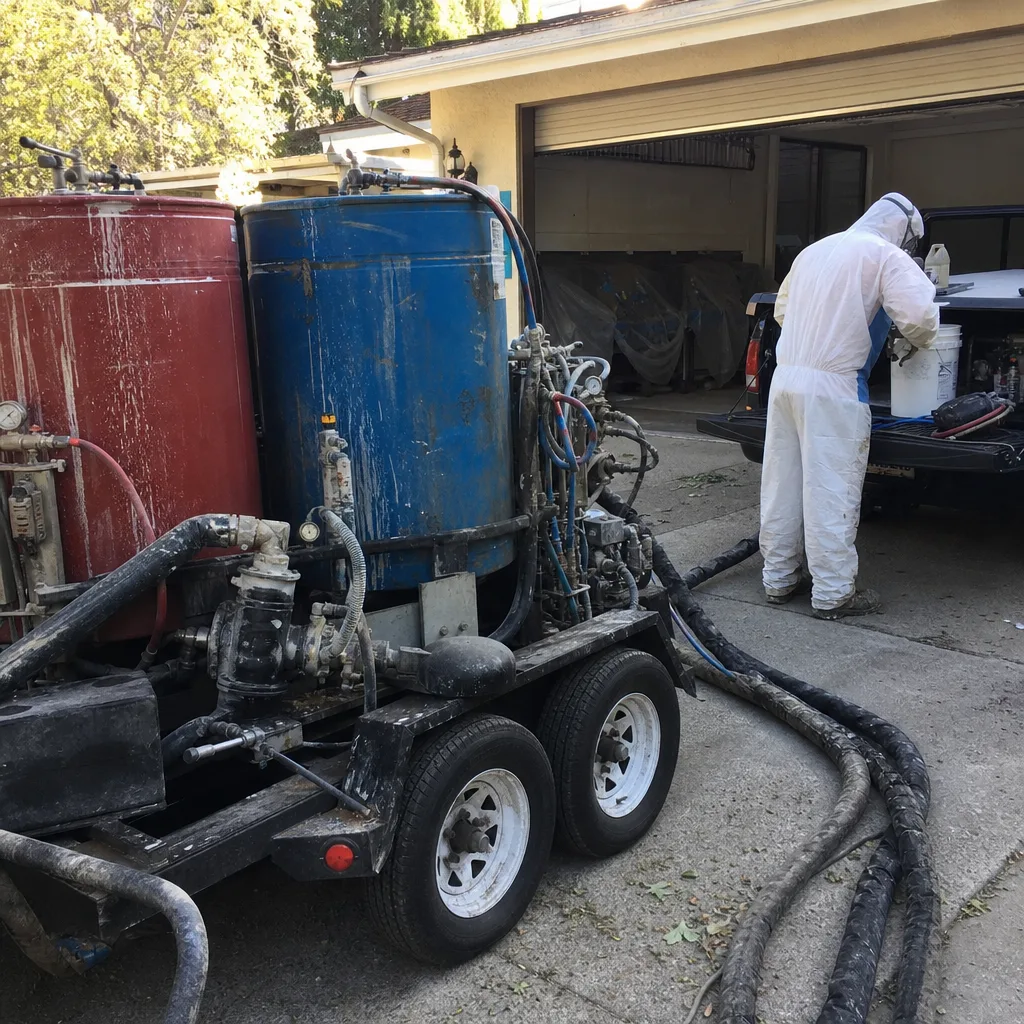
Fast, Reliable Spray Foam Insulation Across Sierra Madre
Spray foam insulation in Sierra Madre is a different job than it is down the hill. The canyon-mouth lots along Sierra Madre Boulevard, the older Craftsman bungalows with balloon framing, the vaulted ceilings in hillside ranches – all of it changes how foam should be applied and what prep work matters. We’re North Tustin Insulation, and we work in Sierra Madre regularly, from the 91024 foothill streets to the 91025 neighborhoods around Baldwin Avenue. If you’re dealing with hot attics in summer, cold rooms in winter, or rodent-disturbed insulation, call (877) 265-5712 and we’ll send a crew that knows this town’s houses.
Why North Tustin Insulation Is Sierra Madre’s Preferred Spray Foam Insulation Company
Sierra Madre homeowners tend to ask sharper questions than most. They know their houses are old, they know the wiring might be original, and they don’t want a crew that treats their 1920s bungalow like a 1990s tract home. We carry that same respect into every estimate. Allen Decker runs our insulation-only operation, and he’s built the company around one trade: matching the right material to the right house. That focus means our technicians understand balloon framing, knee walls, dormers, and knob-and-tube wiring – the things that actually determine whether a Sierra Madre spray foam job succeeds or fails.
We don’t install roofing. We don’t do HVAC. Insulation is the whole job, and that’s why Sierra Madre customers call us back for the second project, the next room, the garage they finally want conditioned. Our crews know the foothill streets well enough to plan parking around narrow driveways and steep approaches. We give straight answers about what spray foam can and can’t do in a house with original wiring, and we never push open-cell where closed-cell is the honest call.
Spray Foam Wall Insulation in Sierra Madre
Spray Foam Wall Insulation in Sierra Madre usually means retrofitting walls in homes that were never built with any meaningful cavity insulation. Many of the 1920s Craftsman bungalows and 1940s cottages here have empty stud bays or a thin layer of degraded material. We drill and fill from the interior or exterior depending on access, inject open-cell Icynene or Demilec foam, and patch cleanly. For Sierra Madre homeowners, the payoff is immediate: rooms that hold temperature, fewer drafts off the foothills, and less noise from the street. A typical retrofit on a two-bedroom bungalow runs $4,200 to $7,800, while larger two-story homes with lath-and-plaster walls land between $8,000 and $14,000.
Air-sealing before any foam goes in
Foothill wind finds every gap in a Sierra Madre wall. We seal top plates, outlet boxes, and rim areas before foam application. Skipping this step wastes material and leaves the house leaky.
Working around old framing and wiring
Balloon framing means wall cavities run straight from foundation to attic. That’s a highway for heat and rodents. We inspect each bay before injecting, and where original knob-and-tube is present, we recommend separation or rewiring before foam touches it.
Rim Joist Spray Foam in Sierra Madre
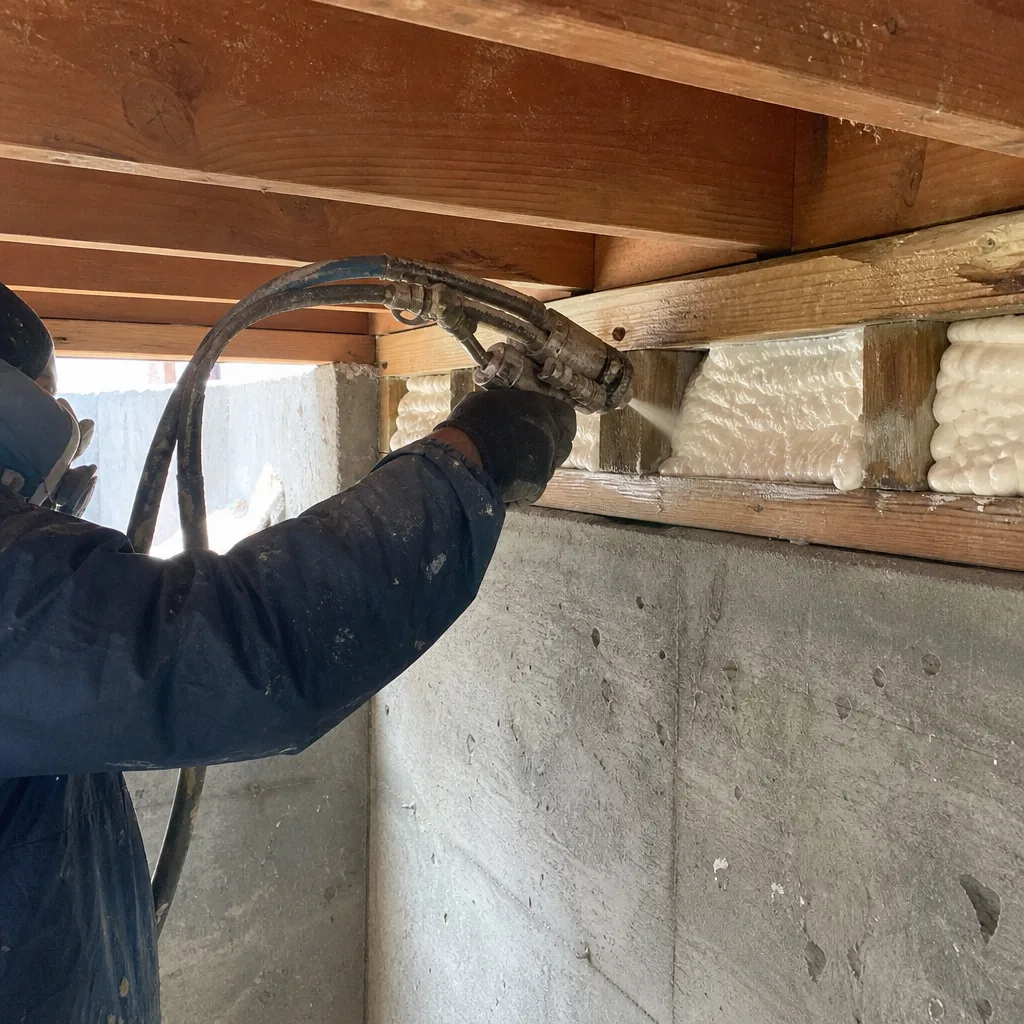
Rim Joist Spray Foam in Sierra Madre is one of the highest-return upgrades for older homes on hillside lots. The rim joist, where floor framing meets the foundation, is often completely unsealed in pre-war construction. In Sierra Madre, that gap lets cold canyon air into the crawlspace and gives mice a direct entry point. We apply closed-cell Demilec foam to rim joists, sealing the thermal boundary and blocking rodent access at the same time. Most single-story Sierra Madre homes run $1,300 to $2,600 for full rim joist treatment; two-story homes with accessible rim areas typically fall between $1,800 and $3,400.
Crawlspace and foundation conditions
Hillside crawlspaces are often shallow and irregular. Our crews work in tight clearances and understand how moisture and soil conditions on sloped lots affect foam adhesion and longevity.
Rodent exclusion built into the job
Foam alone doesn’t stop determined squirrels. Before we spray rim joists, we identify entry points, recommend exclusion materials, and seal the areas rodents actually use. Foam then becomes a barrier, not a chew toy.
Trusted Brands We Service in Sierra Madre
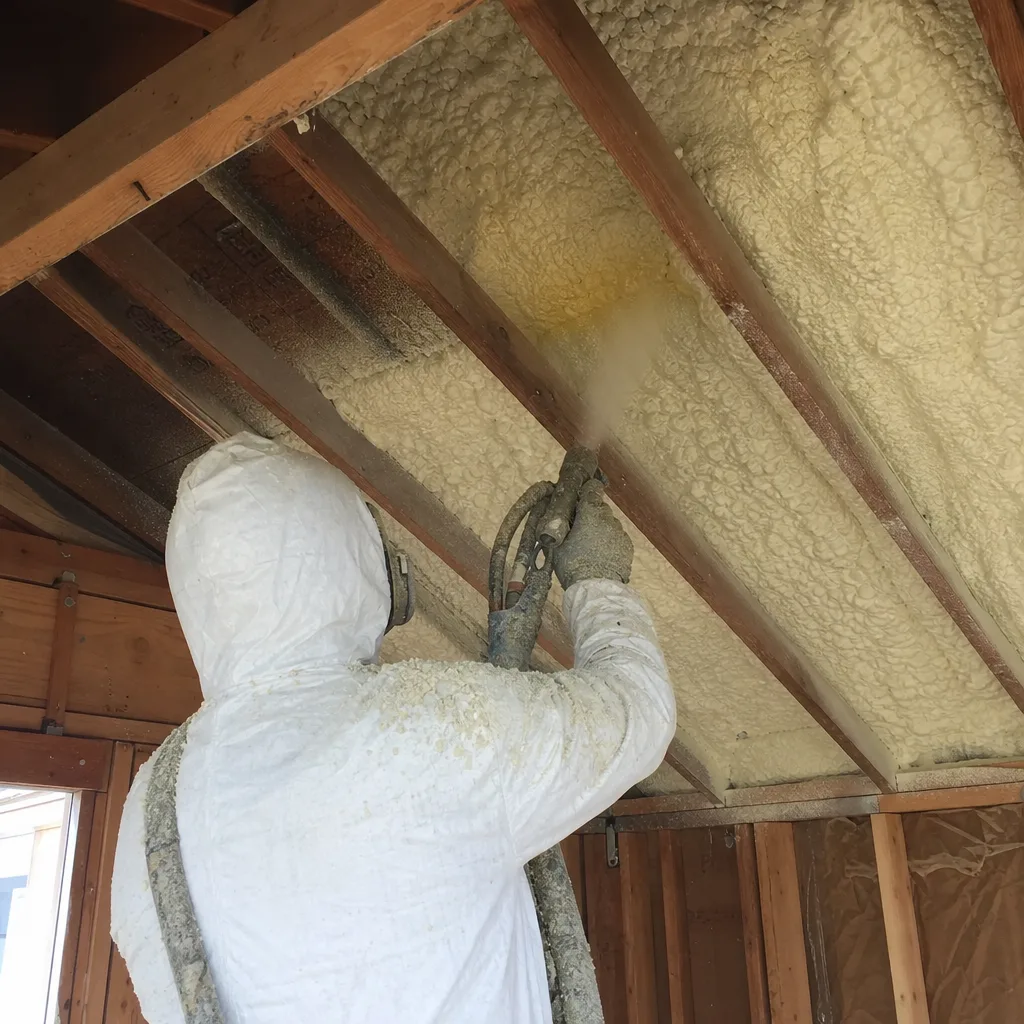
We carry Icynene and Demilec spray foam systems, two of the most respected names in residential insulation. That matters in Sierra Madre because so many homes need a specific foam type: open-cell for interior walls and sound control, closed-cell for rim joists, crawlspaces, and exterior applications where moisture is a factor. We also stock GreenFiber cellulose and Owens Corning fiberglass for hybrid jobs where spray foam isn’t the right tool for every cavity. Since we hold eight major brands across four material categories, the recommendation comes from your house’s needs, not what’s left in the truck. Parts and material runs for Sierra Madre jobs are fast, because we plan the loadout before we leave the yard.
Common Spray Foam Insulation Problems We See in Sierra Madre Homes
- Santa Ana wind pressure on canyon-mouth attics. Wind driven air moves through unsealed vents and gaps, carrying dust and heat into the attic and degrading spray foam adhesion over time. We address vent baffling and air-sealing before foam application so the material bonds and stays put.
- Roof rat and squirrel disturbance. In the foothill streets above Sierra Madre Boulevard, rodents chew through fiberglass and shift batts to build nests. If exclusion isn’t done first, spray foam becomes just another surface for them to work around.
- Knob-and-tube wiring in older bungalows. Encapsulating live knob-and-tube with foam can cause overheating. We flag this during the estimate and recommend a licensed electrician separate or rewire affected circuits before we spray.
- Vaulted ceilings and exposed rafter bays. Hillside ranches often have irregular roof cavities where standard foam depths won’t meet R-value targets. We measure each bay and adjust the install, because a one-size approach leaves foam thin where it matters most.
Pricing for Spray Foam Insulation in Sierra Madre, CA
Spray foam wall insulation in Sierra Madre typically runs $4,200 to $7,800 for a small to mid-size bungalow, and $8,000 to $14,000 for larger two-story homes. Rim joist spray foam lands between $1,300 and $3,400 depending on crawlspace access and linear footage. Closed-cell foam costs more per board foot than open-cell, but delivers higher R-value per inch and adds structural rigidity, which matters on some older hillside homes. The biggest cost variable in Sierra Madre is prep: rodent exclusion, air-sealing, and wiring correction add labor hours but determine whether the foam actually performs. Call (877) 265-5712 for a free estimate. We give you a written number with material specs, not a ballpark guess.
We Also Serve Cities Near Sierra Madre
North Tustin Insulation provides Spray Foam Insulation across the San Gabriel foothills. We regularly work in Arcadia, East Pasadena, Mayflower Village, and Monrovia. If you’re in a neighboring community, the same material-savvy approach applies. See our Spray Foam Insulation in Sierra Madre page for local specifics or call (877) 265-5712 to schedule an estimate.
Serving Sierra Madre, CA — Our Local Coverage Area
We’re based in the Sierra Madre area and know this community well. Use the map below to see our service coverage — if you’re nearby, we can almost certainly help.
FAQs About Spray Foam Insulation in Sierra Madre
Rodent activity directly changes the order of operations. In Sierra Madre’s foothill neighborhoods, foam should not be applied until exclusion work and air-sealing are complete, otherwise the material gets undermined before it can perform. Call (877) 265-5712 and we’ll walk you through what’s needed for your specific lot.
It can, but only after the wiring is addressed. Knob-and-tube carries heat, and foam traps it. We recommend a licensed electrician separate or rewire affected circuits first, then we spray. We’ll flag this at the estimate, not after the walls are open.
For most Sierra Madre homes, we target R-21 to R-38 in attic and roof applications, and R-13 to R-21 in walls, depending on the cavity depth and whether you’re using open-cell or closed-cell. Closed-cell hits higher R-value per inch, which helps on vaulted ceilings where space is limited.
Yes. Exposed rafter bays are actually where spray foam outperforms batts or blown-in, because foam conforms to irregular cavities and seals the air leaks that batts leave behind. We measure each bay and adjust thickness to hit your R-value target.
We carry Icynene and Demilec spray foam systems. Open-cell Icynene goes into interior walls and sound-control applications; closed-cell Demilec handles rim joists, crawlspaces, and any area with moisture exposure. We choose the brand based on the job, not the other way around.
Written by Allen Decker, Owner at North Tustin Insulation, serving Sierra Madre and the San Gabriel foothills.