
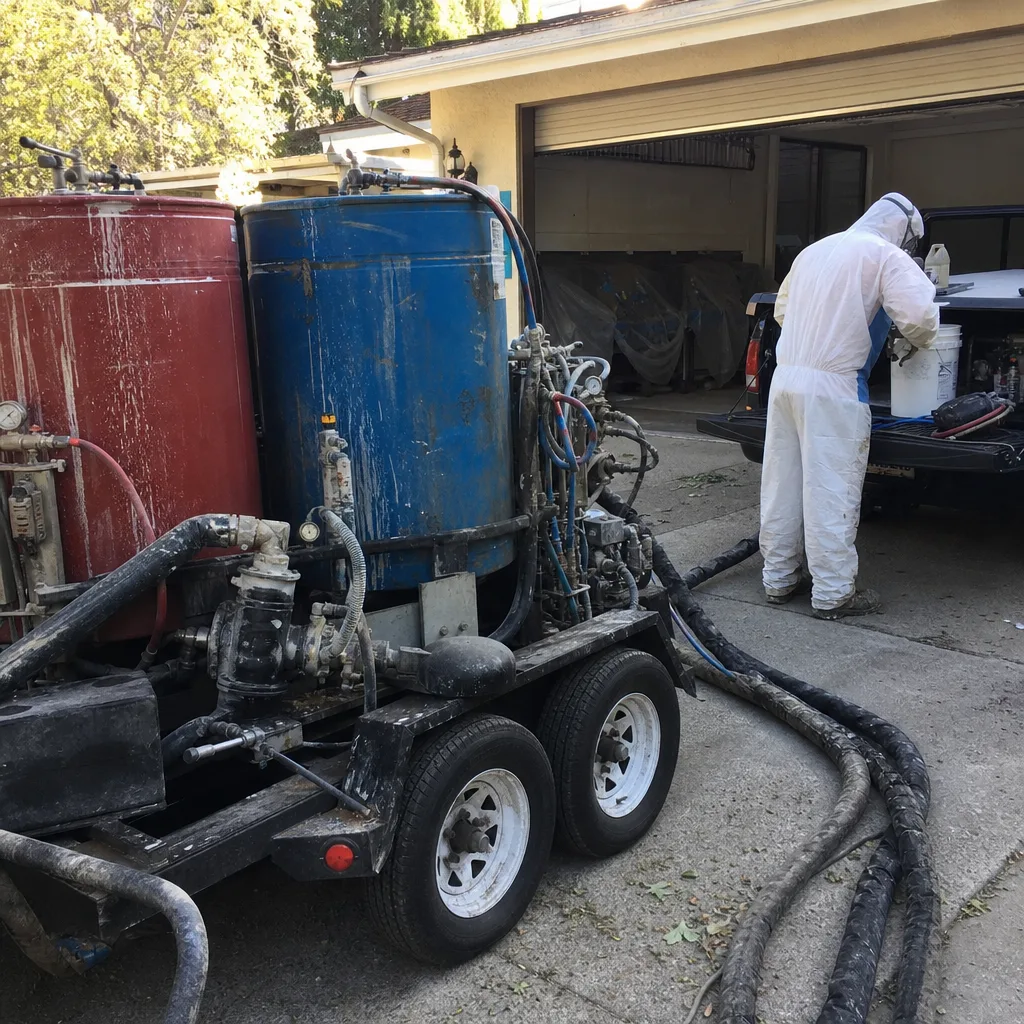
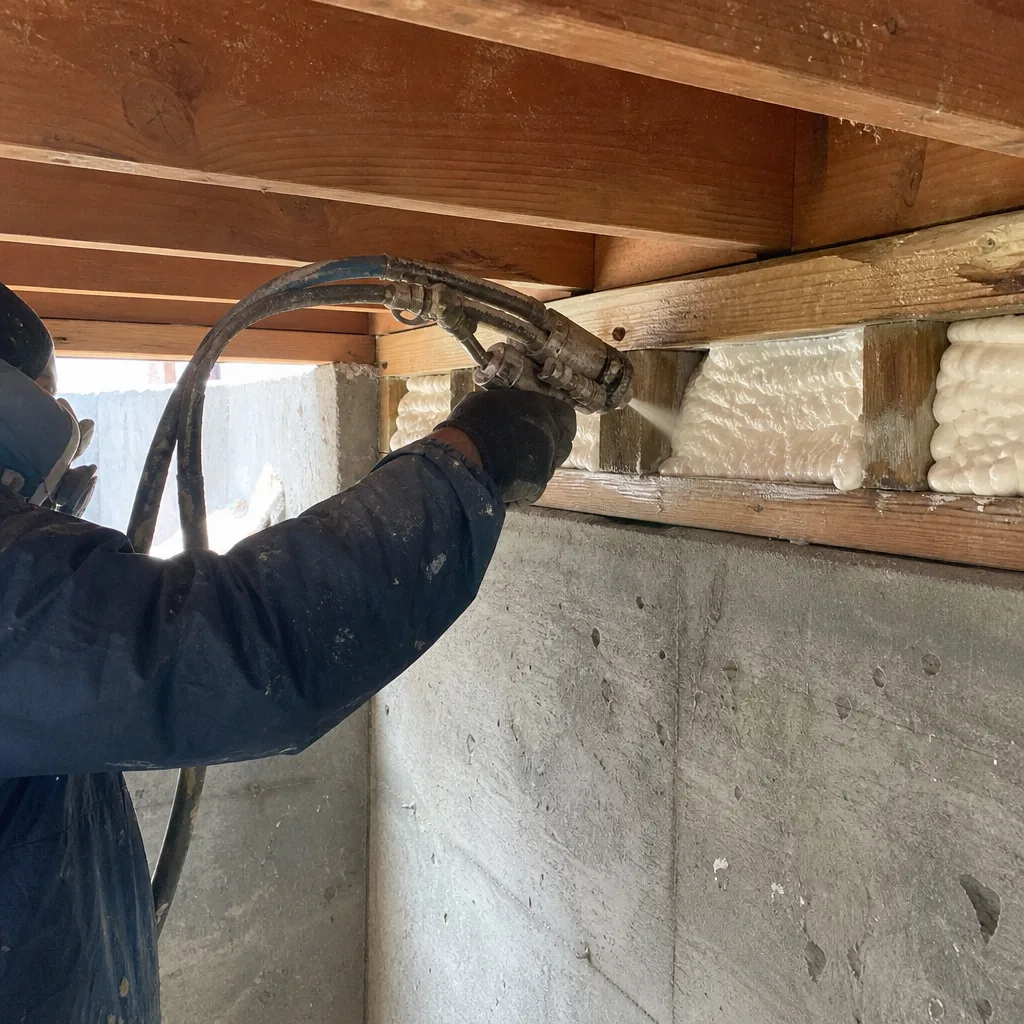
Fast, Reliable Spray Foam Insulation Across Yucca Valley
Spray foam insulation in Yucca Valley typically runs $2.50 to $6.50 per board foot installed, with most whole-attic projects landing between $4,800 and $14,000 depending on foam type and square footage. We’re North Tustin Insulation, and we’ve worked on enough homes across the 92284 and 92286 zip codes to know exactly what high-desert conditions demand from an insulation system. The same attic that hits 140°F in July drops below freezing in January out here, and spray foam is one of the few materials that handles both extremes without sagging, settling, or losing its seal. Call (877) 265-5712 to schedule a free estimate with a crew that knows Yucca Valley’s housing stock and climate firsthand.
Why North Tustin Insulation Is Yucca Valley’s Preferred Spray Foam Insulation Company
We’re insulation specialists first and only. That means every conversation we have with a Yucca Valley homeowner starts with the same question: what is your attic actually doing right now? Not what we happen to have loaded on the truck. We carry Icynene and Demilec spray foam systems, and our crews are trained on both open-cell and closed-cell applications. When a home off Yucca Mesa Road or down toward the 247 corridor needs a specific foam chemistry, we match it to the structure and the exposure, not to whatever’s easiest to spray. Allen Decker built this company around that principle, and it shows in the recommendations we make.
Our Spray Foam Insulation team has pulled contaminated batt insulation out of attics all over Yucca Valley, and we know what lies underneath the older homes here. You don’t need a contractor who’s never seen a packrat tunnel. You need someone who knows the failure patterns before they open the hatch. We’re licensed, insured, and bonded, and every project gets a straight answer on material choice before any foam is mixed.
Garage Spray Foam Insulation in Yucca Valley
Garage Spray Foam Insulation in Yucca Valley is one of the fastest ways to cut heat gain in attached garages that sit under direct high-desert sun, and it typically costs between $1,200 and $3,800 depending on ceiling area, access, and foam type. We spray the underside of the roof deck or the garage ceiling cavity, which drops the garage interior by 20 to 30 degrees in summer and keeps heat from bleeding into adjacent living spaces. Older ranch homes in the 92284 area often have uninsulated garage ceilings, and in July those garages become ovens that drive up cooling load on the whole house.
Open-cell for garage ceilings
When budget matters and the garage door seals are decent, open-cell foam at roughly $2.50 to $3.50 per board foot does solid work on garage ceilings. It air-seals and insulates in one pass, and it’s easier to trim flush for a clean finish. For attached garages that don’t have living space above, this is often the right call.
Closed-cell for temperature control
Closed-cell runs more like $3.50 to $6.50 per board foot in Yucca Valley, and it’s worth it when you want the garage to hold a stable temperature year-round. The higher R-value per inch also means a thinner profile on rafters, which matters in older garages with limited headroom. We’ve done enough of these to know when the extra cost pays for itself.
Closed Cell Spray Foam Insulation in Yucca Valley
Closed Cell Spray Foam Insulation in Yucca Valley is the workhorse for homes that face both 100°F summers and hard winter freezes, and a full attic application here typically runs $6,000 to $14,000 for a standard single-story ranch. The foam’s dense cell structure gives you roughly R-6.5 to R-7 per inch, acts as a vapor barrier, and structurally reinforces the roof deck it’s sprayed onto. For Yucca Valley’s mid-century homes with low-slope roofs and minimal attic ventilation, it’s often the only material that makes real sense.
Roof deck applications on older ranches
When we spray closed-cell directly to the underside of the roof deck, we’re creating an unvented attic assembly. That’s a specific technique, and it matters out here because it keeps the 140°F attic air from ever forming in the first place. Homes along the 92286 corridor with vaulted ceilings or finished attics benefit most.
Pest resistance in rural parcels
East of town, where packrats and rodents are a constant pressure, closed-cell foam does something fiberglass never will: it seals entry points. We apply it to gable ends, soffit transitions, and rim joists, and the foam’s density makes it far less inviting for pests to tunnel through. That’s a real advantage on Yucca Mesa Road and the rural parcels beyond.
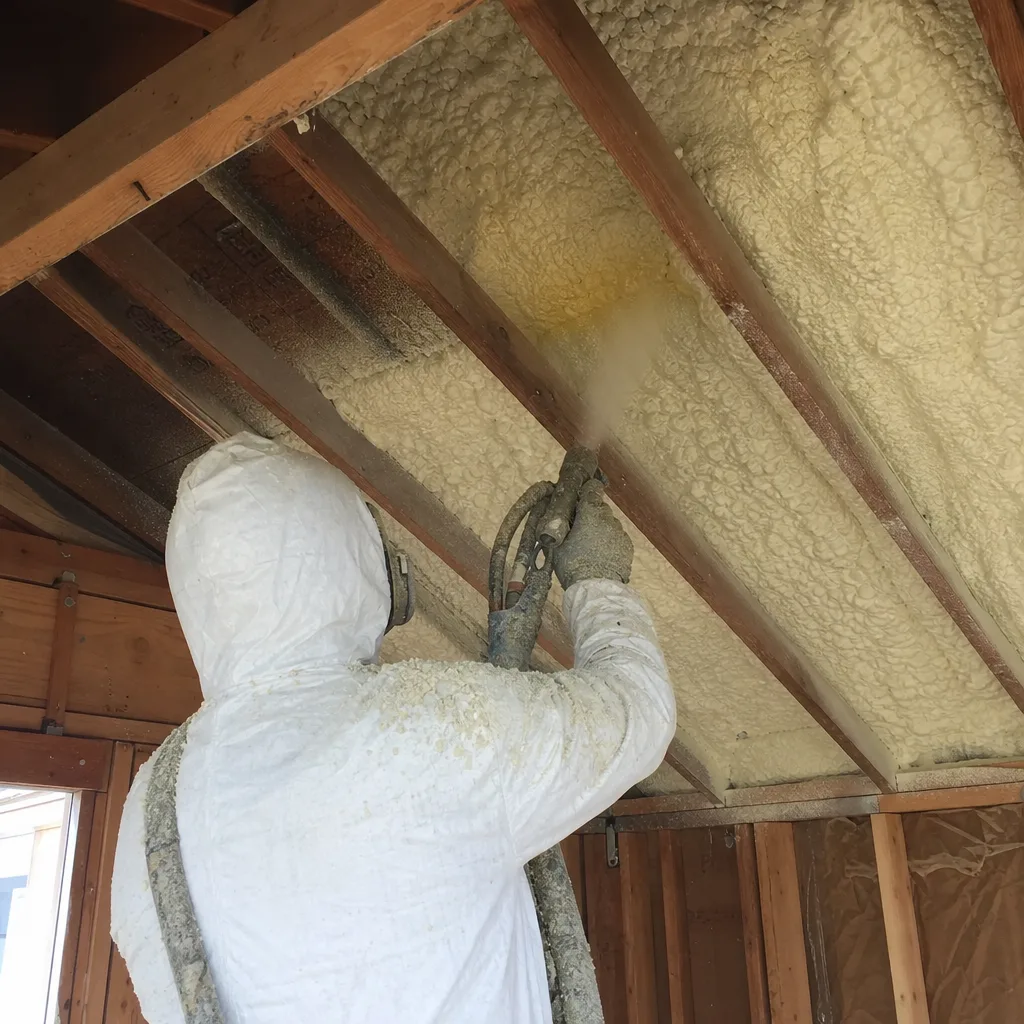
Trusted Brands We Service in Yucca Valley
We don’t push one foam brand on every home, because Yucca Valley homes don’t all need the same chemistry. Our crews spray Icynene open-cell and Demilec closed-cell, and we stock the supporting materials needed to handle both systems without running back down the hill mid-project. CertainTeed products round out the lineup when a hybrid approach, foam plus batt in certain cavities, makes more sense for a manufactured home or a specific budget. Carrying multiple recognized brands means we recommend from real options, not from a single supplier relationship.
Common Spray Foam Insulation Problems We See in Yucca Valley Homes
- Foam sprayed over rodent-contaminated batts. If packrat tunnels and droppings aren’t removed first, the foam seals in the odor and leaves live entry paths behind. We remove and clean before any foam is applied.
- High-expansion foam bowing manufactured home paneling. Phone factory wall cavities are thin. Use the wrong expansion rate and you’ll crack interior panels. We use depth-controlled application on every manufactured home in the 92284 and 92286 areas.
- Delamination from dusty substrates. Yucca Valley’s spring winds coat attic surfaces in fine dust. Spray foam doesn’t bond to dust. We clean and prep every surface before spraying, or the foam peels off in sheets within a year.
- Poorly planned roof deck applications on aging homes. Older ranches often have recessed can lights or knob-and-tube remnants that require isolation before foam touches the deck. Skipping that step creates fire risk and code violations.
Pricing for Spray Foam Insulation in Yucca Valley, CA
You’ll pay $2.50 to $3.50 per board foot for open-cell spray foam in Yucca Valley, and $3.50 to $6.50 per board foot for closed-cell. A typical 1,500-square-foot attic at 3 to 4 inches of closed-cell runs $7,500 to $11,000 start to finish. Garage ceiling projects are smaller: $1,200 to $3,800. Rim joist sealing in a crawlspace or basement runs $800 to $2,200. Rodent-damaged removal and replacement adds $1,500 to $3,500 depending on access and contamination. We give exact numbers after we look at the attic, not before. Call (877) 265-5712 for a free estimate, and you’ll have a written number the same day we visit.
We Also Serve Cities Near Yucca Valley
Our crews regularly run out to Morongo Valley, Desert Edge, Desert Hot Springs, and Garnet for spray foam projects of every size. If you’re just outside Yucca Valley proper, call us anyway. We know the high-desert building patterns across the whole basin, and we’re already working in your neighborhood.
Serving Yucca Valley, CA — Our Local Coverage Area
We’re based in the Yucca Valley area and know this community well. Use the map below to see our service coverage — if you’re nearby, we can almost certainly help.
FAQs About Spray Foam Insulation in Yucca Valley
Yes, and it’s one of the few materials that handles both ends of the temperature swing without degrading. Closed-cell foam maintains its R-value through freeze-thaw cycles and resists the thermal movement that compresses batt insulation over time. Open-cell performs well in vented attics where air-sealing is the priority. For Yucca Valley specifically, where summer highs top 100°F and winter nights drop below freezing, closed-cell on the roof deck solves both problems in one application. Call (877) 265-5712 to discuss which chemistry fits your home.
No. Spray foam should never be applied over contaminated batts. The damaged material must be removed, the attic cleaned, and entry points sealed before any foam goes down. We do this removal-and-replacement work regularly on rural parcels east of town where packrat activity is chronic. It’s the difference between a sealed, clean attic and a foam shell housing a rodent problem.
Yes, with the right foam and the right technique. Manufactured homes have thin factory wall and floor cavities that can’t tolerate high-expansion foam. We use specific low-expansion or depth-controlled open-cell applications for these homes, and closed-cell where structural rigidity matters. A generic spray job here will bow panels. We don’t do generic.
Spray foam is an air barrier as much as an insulator. It seals the gaps, cracks, and penetrations where spring winds push fine desert dust into the attic and wall cavities. For Yucca Valley homes along exposed ridgelines and open lots, that sealing function matters as much as the R-value. Call (877) 265-5712 for a free attic assessment, and we’ll show you exactly where your leaks are.
Closed-cell foam is denser, gives about R-6.5 to R-7 per inch, and acts as a vapor barrier. It’s the better choice for attached garages that get direct afternoon sun and need maximum temperature control. Open-cell is lighter, cheaper at roughly $2.50 to $3.50 per board foot, and works well for garages where air-sealing is the main goal. For most Yucca Valley garages, closed-cell on the ceiling returns the most comfort per dollar spent. Estimates are free. Call (877) 265-5712.
Contact North Tustin Insulation for Spray Foam in Yucca Valley
If your Yucca Valley home has an attic that bakes in summer and freezes in winter, or you’ve found rodent damage in the insulation, spray foam is likely the right answer. Allen Decker and the rest of our team are ready to walk you through the options, give you a written estimate, and get the job done without drama. Call (877) 265-5712 today, and we’ll schedule a free assessment at your Yucca Valley property.
Written by Allen Decker, Owner at North Tustin Insulation, serving Yucca Valley and the high-desert communities of the Morongo Basin.