Fast, Reliable Attic Insulation Across March Air Force Base
Attic insulation in March Air Force Base has to work harder than almost anywhere else in Southern California. This pocket of the Inland Empire sits in a hot inland basin where summer temperatures routinely exceed 100°F, and the sun loads roofs and attics relentlessly. We know exactly what that does to insulation over time, because we’ve pulled enough compressed, heat-degraded batts out of 92551 attics to fill a hangar. If your March Air Force Base home runs hot upstairs, cycles the AC nonstop, or shows wildly uneven room temperatures, the attic is usually the culprit. Call (877) 265-5712 and we’ll come look at it.
Why North Tustin Insulation Is March Air Force Base’s Preferred Attic Insulation Company
We’re an insulation-only contractor. That’s not a side note; it’s the whole point. Every technician on our crew works exclusively on insulation, and every conversation we have with a March Air Force Base homeowner is about one trade. No roofing upsell, no HVAC cross-sell, no general-remodel deflection. That focus matters when you’re deciding between blown-in cellulose, open-cell spray foam, or batts in a shallow 1950s attic, because our recommendation is driven by what the home actually needs, not by which material happens to be on our truck.
Allen Decker leads our team, and he’s built the company around matching the material to the home, not the other way around. For March ARB property owners, that means we’ll tell you straight whether your original batt insulation should be removed or topped off, and we’ll specify an R-value that makes sense for 100°F summers and cool, dry winters. Homeowners across the base-adjacent housing areas call us because we carry real product depth: Owens Corning fiberglass, GreenFiber recycled cellulose, Icynene spray foam, and more. If you’re in 92551 and serious about cutting utility bills, call (877) 265-5712.
Attic Insulation Removal in March Air Force Base
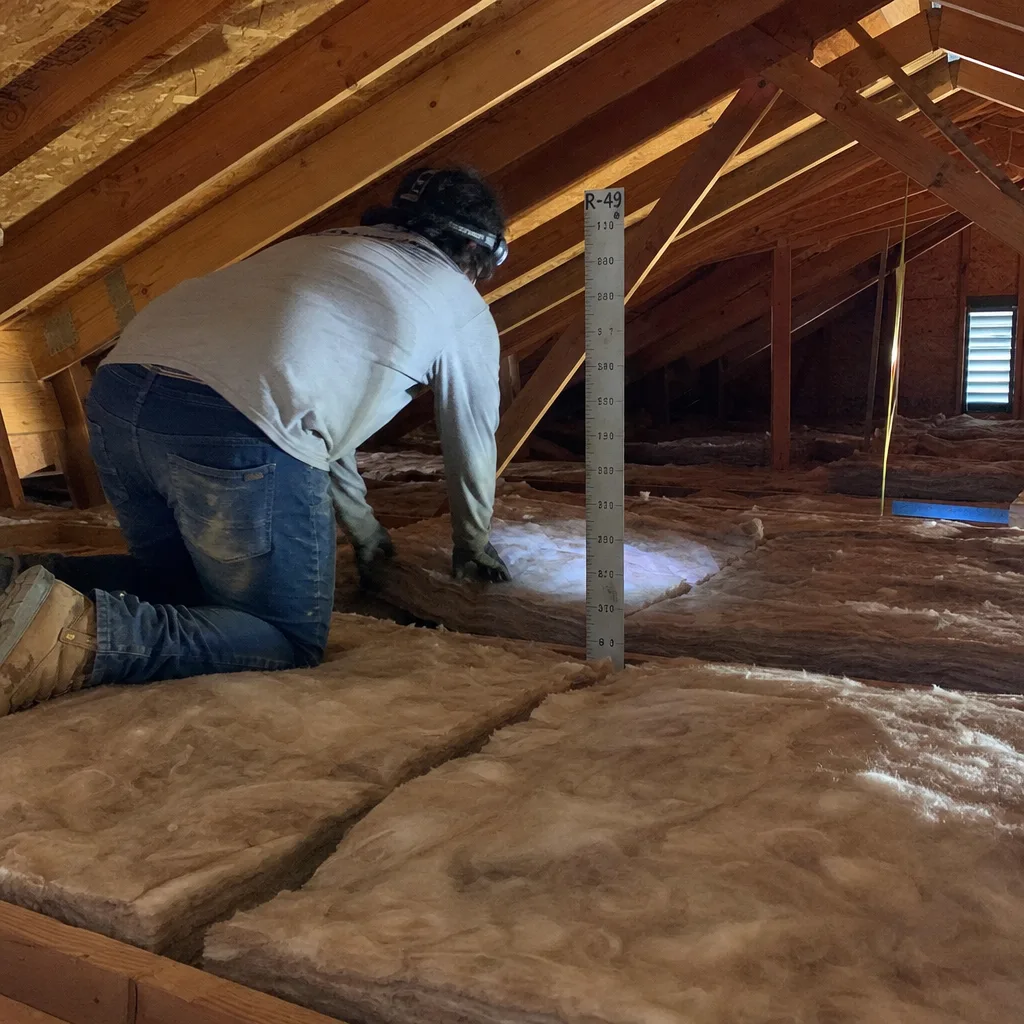
Attic Insulation Removal in March Air Force Base is frequently the right first step when original mid-century batt insulation has slumped, compressed, or been contaminated by rodents, dust, or decades of desert heat cycling. In the 1950s – 1980s tract homes and base-adjacent housing around 92551, we regularly find fiberglass batts that have lost more than half their rated thickness, especially near the eaves and knee walls. A typical attic insulation removal in March Air Force Base runs $1.50 – $2.75 per square foot, which includes extraction, bagging, and disposal. We remove it down to the deck, inspect what’s underneath, and prep the space for the right replacement system.
The reason removal matters here more than it does in coastal cities is heat aging. A 1960s house in Moreno Valley or Woodcrest has essentially the same attic problem as one in March ARB housing: the insulation looks intact on top, but the fiberglass has been baked, flexed, and compressed until it’s doing a fraction of its original job. We installed GreenFiber loose-fill over a scraped-clean attic deck more than once after removing material so depleted it crumbled when handled.
When Removal Beats a Top-Up
If the existing insulation is damp, moldy, rodent-soiled, or compressed below roughly half its original depth, topping it off just buries the problem. In 92551 specifically, we recommend removal when batts have separated at the seams and left thermal channels that let attic heat pour into living space. Pulling it clean lets us air-seal the top plates and penetrations before the new material goes down.
What Removal Unlocks
A clean attic gives us access. We can check the radiant-barrier facing, fix baffles that have come loose, and document the finished R-value against what the March ARB housing office expects. That documentation keeps upgrades reviewable, not just visually full.
Insulation Contractors in March Air Force Base
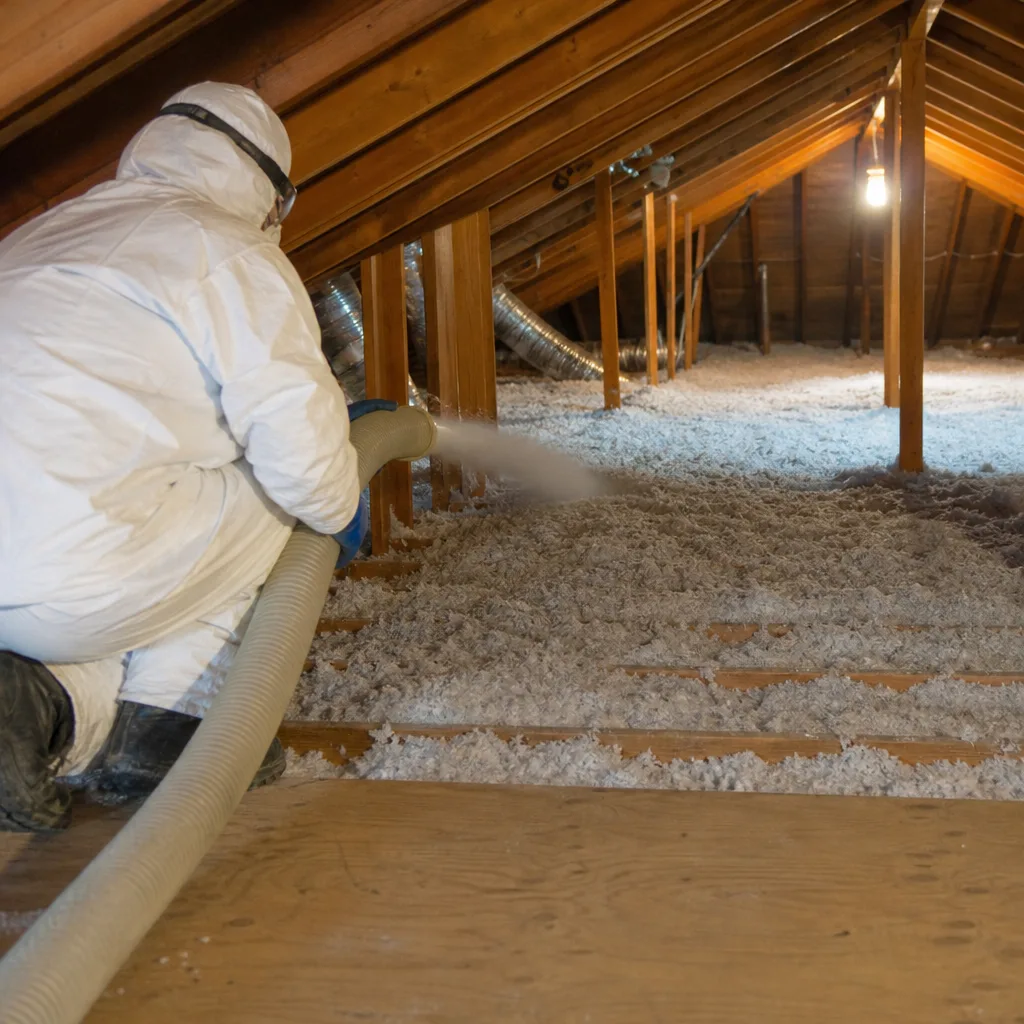
Insulation contractors in March Air Force Base come in two types: generalists who’ll insulate an attic as a side job, and specialists who do nothing else. North Tustin Insulation is the second type. We carry eight nationally recognized insulation brands across fiberglass, mineral wool, cellulose, and spray foam categories, and we’re authorized to install Owens Corning and CertainTeed products, two of the most recognized names in residential insulation. When we recommend GreenFiber cellulose for a shallow 92551 attic, it’s because that’s the right material for the cavity depth and heat profile, not because it’s what the crew knows how to blow.
What does hiring the right insulation contractor in March Air Force Base cost? For attic work, blown-in installation typically runs $1.75 – $3.25 per square foot depending on material and target R-value, while spray foam runs higher because it air-seals as it insulates. We’ll give you a written number before any work starts, and it’s a free estimate. Call (877) 265-5712 and Allen’s team will schedule the visit.
Choosing a Specialist Over a Generalist
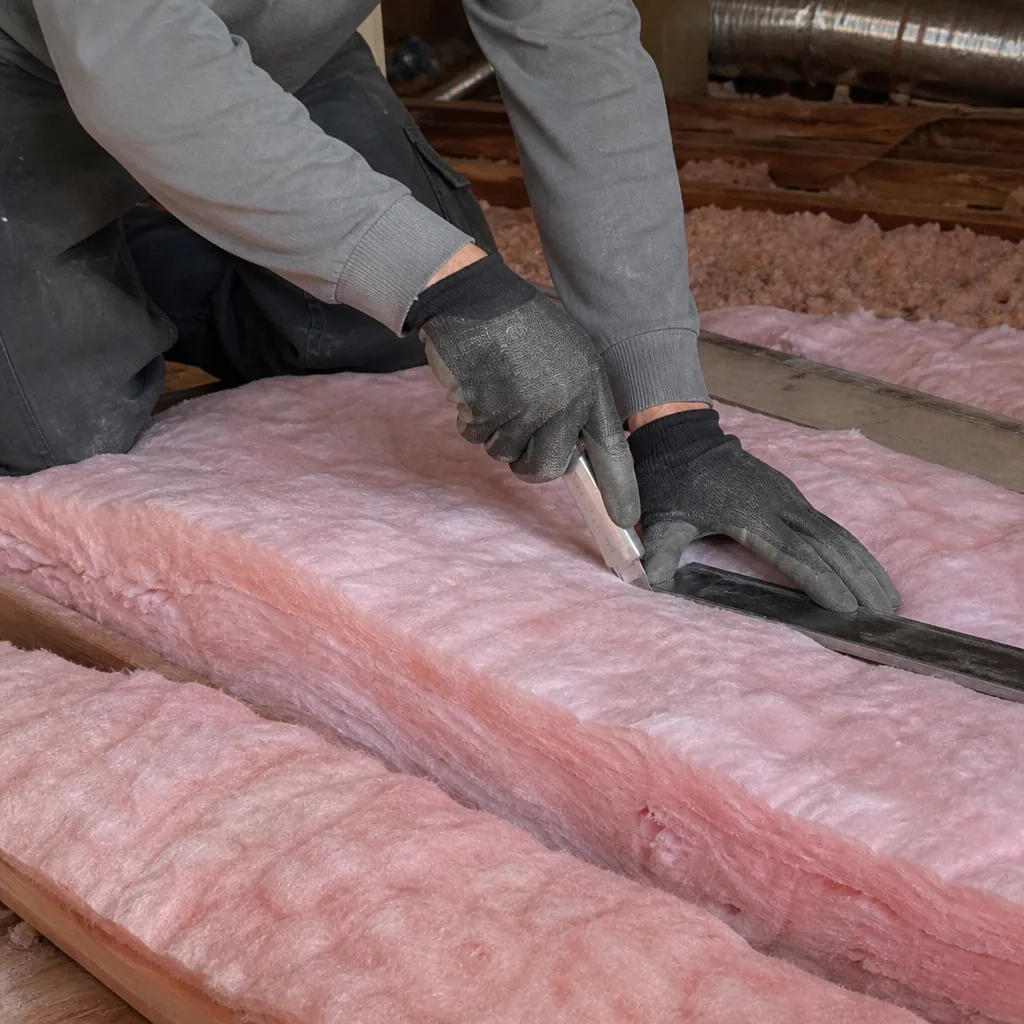
An insulation-only contractor focuses on the details that get skipped otherwise: air sealing, baffle placement, depth consistency, R-value verification. That’s the difference between an attic that looks insulated and one that actually performs in an inland heat basin. We carry three installation methods under one roof: attic batts, blown-in, and spray foam.
What a Good Insulation Estimate Includes
We’ll check attic access, measure the existing depth, evaluate the current material, and give you a breakdown by material and method. No vague line items. No “insulation package” without specifics. You’ll know the material, the target depth, and the finished R-value.
Trusted Brands We Service in March Air Force Base
We carry and install a real cross-section of insulation materials, including Icynene spray foam for open- and closed-cell applications, Demilec spray foam where a higher R-value per inch is required, GreenFiber recycled cellulose for loose-fill performance in shallow attics, and Owens Corning fiberglass for batts and blown-in standard work. That means a March Air Force Base homeowner gets an honest recommendation between materials, not whichever brand the truck happened to load that morning, whether it’s standard batts or a specialized Reflectix repair in March Air Force Base. The brand portfolio matters because different attics need different systems, and 100°F summers punish the wrong choice.
Common Attic Insulation Problems We See in March Air Force Base Homes
- Heat-baked mid-century batts that look fine on top: In base-adjacent housing built from the 1950s through the 1980s, the original fiberglass often looks undisturbed, but decades of 100°F+ attic temperatures have cooked the binder and compressed the material until it’s lost most of its rated R-value. We’ve measured 6-inch batts sitting at under 3 inches of actual thickness.
- Shallow, low-slope attics that trap radiant heat: Much of the 92551 stock has shallow roof geometry with tight clearances at the eaves and discontinuous knee walls. Hot air sits up there and bleeds into living space through ceiling penetrations and gapped top plates.
- Single-pane and early dual-pane window heat gain: Those windows push heat up into the attic faster than a properly insulated ceiling can reject it. In March Air Force Base, the attic is often blamed for comfort problems that start at the window but get amplified by a degraded ceiling barrier.
- Disconnected or missing baffles: We see it constantly in mid-century tract homes: baffles that were never installed or have fallen away, leaving soffit vents blocked and turning the attic into a still-air oven. That starves the ventilation the roof deck needs.
Pricing for Attic Insulation in March Air Force Base, CA
Attic insulation costs in March Air Force Base depend on method, material, target R-value, and whether removal is needed first. A typical blown-in insulation job in 92551 runs $1.75 – $3.25 per square foot. Attic batt installation runs $1.25 – $2.50 per square foot depending on the product and existing conditions. Attic insulation removal, when required, adds $1.50 – $2.75 per square foot on top. An attic top-up over existing, still-viable material can run $0.90 – $1.60 per square foot. Spray foam, which air-seals as it insulates, runs higher per square foot but often eliminates the need for separate air sealing. For a specific number on your attic, call (877) 265-5712 and we’ll set up a free estimate with Allen’s team.
We Also Serve Cities Near March Air Force Base
Our Attic Insulation team works throughout the Inland Empire corridor around March Air Force Base, including Moreno Valley, Woodcrest, Perris, and Good Hope. If you’re in any of these nearby communities or a base-adjacent neighborhood within March Air Force Base proper, we’ll send a specialist out to assess the attic, check the existing material, and give you a straight recommendation. Same team, same brands, same focus: insulation and nothing else.
Serving March Air Force Base, CA — Our Local Coverage Area
We’re based in the March Air Force Base area and know this community well. Use the map below to see our service coverage — if you’re nearby, we can almost certainly help.
FAQs About Attic Insulation in March Air Force Base
March ARB sits in the Inland Empire’s hottest corridor, where summer temperatures routinely exceed 100°F and the roof deck takes solar load hard. Fiberglass batts in a 150°F attic lose their loft and binder over time; cellulose settles; and the constant thermal cycling breaks down the material’s ability to trap air. Coastal attics rarely see that sustained heat, so the same insulation lasts far longer. If your 92551 home still has original 1950s – 1980s insulation, it’s likely performing at a fraction of its rated R-value. Call (877) 265-5712 for a free attic check.
Yes, in base-adjacent housing, any insulation upgrade often has to account for the March ARB housing office’s own energy and maintenance guidelines, not just civilian Title 24. That can mean documenting the finished R-value, verifying depth uniformity, and ensuring ventilation wasn’t compromised. We’ve done this work on mid-century military-housing units near the flight line, and we document the finished depth and R-value so the upgrade passes review rather than just looking full.
For shallow, low-slope 1950s – 1980s attics, we lean toward GreenFiber loose-fill cellulose because it distributes to a uniform depth in tight cavities and fills gaps at eaves and knee walls better than batts. In attics with enough depth for it, we also install Owens Corning fiberglass batts or blown-in fiberglass. Spray foam from Icynene or Demilec works where the attic is unusually tight or where air sealing is the primary goal. The material depends on the attic geometry and the heat profile, not on what’s easiest to install.
Remove it when the batts are compressed below roughly half their original thickness, when the material is damp or rodent-soiled, or when gaps at the seams have created thermal channels that let heat drop into the living space. In March Air Force Base attics, batting that’s been baked for 40 – 70 years is usually done. Topping it off without removal just buries the air leaks and the degraded layer underneath. We’ll tell you straight which path makes sense for your 92551 home.
Single-pane and early dual-pane windows push heat up into the attic faster than a degraded ceiling can reject it, which means the attic insulation has to work even harder to keep upstairs rooms livable. In March Air Force Base homes, that heat gain amplifies existing ceiling insulation deficiencies. We often recommend a slightly higher ceiling R-value for homes with original windows, because the ceiling barrier is doing double duty. Call (877) 265-5712 to get an exact recommendation for your attic.
Get an Honest Attic Insulation Recommendation in March Air Force Base
If your 92551 home runs hot in summer, cold in winter, or just can’t hold temperature, the problem usually starts in the attic. North Tustin Insulation will send a specialist who knows mid-century Inland Empire housing stock, knows which materials hold up under extreme attic heat, and knows how to work around March ARB housing guidelines when they apply. Eight brands. Three installation methods. One trade. Call (877) 265-5712 now for a free estimate, or to schedule a time for Attic Insulation work across March Air Force Base.
Written by Allen Decker, Owner at North Tustin Insulation, serving March Air Force Base from North Tustin, CA.