
Insulation Company in March Air Force Base, CA
Blown in insulation is the most common fix we install in March Air Force Base, because so many homes here were built between the 1950s and 1980s with original batt insulation that has settled, compressed, or simply lost its thermal value after decades of 100-degree summers. The shallow, low-slope attics common to base-adjacent housing make loose fill the practical choice, since it conforms to tight joist bays and irregular framing where rigid batts fight you the whole way. If your July cooling bill makes you wince, call North Tustin Insulation at (877) 265-5712 and we’ll tell you honestly whether your attic needs a top-up or a full re-insulation.
Why March Air Force Base Homes Are Different
March Air Force Base sits in the hottest corridor of the Inland Empire, where summer attic temperatures routinely push past 140°F and the sun loads roofs hard from June through October. That heat doesn’t stay in the attic. It radiates down through ceiling drywall, and if the insulation above your ceiling is old, thin, or full of gaps, your air conditioner is fighting a battle it was never going to win. The 92551 ZIP includes mid-century military housing and adjacent tract homes, many with shallow attic cavities and low-slope roofs that leave less room for insulation than a modern subdivision home. We work in attics where the joists sit at awkward angles and the original fiberglass batts have been walked over, shoved aside during rewiring jobs, or chewed through by rodents. March Air Force Base is also an active Air Reserve installation, which means base-adjacent housing often falls under energy and housing-office standards that differ from civilian Title 24 requirements. We know what those standards expect, and we spec insulation that satisfies them without overselling you material your attic cannot hold.
Our Main March Air Force Base Services
The two jobs March Air Force Base homeowners call us about most are attic insulation replacement and spray foam for hard-to-reach or air-sealing-critical areas.
Attic Insulation in March Air Force Base
Most March Air Force Base attic work starts with an inspection: we climb up, measure what’s there, and tell you whether the existing material is doing anything. In the 92551 housing stock, the answer is frequently no, or not much. Original batts in 60-year-old homes sit at R-11 or less, and desert heat cycling leaves them brittle and compressed. We remove what’s failed, air-seal the ceiling plane, and blow or lay new material to the right R-value for this climate zone. Attic Insulation in March Air Force Base has the full breakdown.
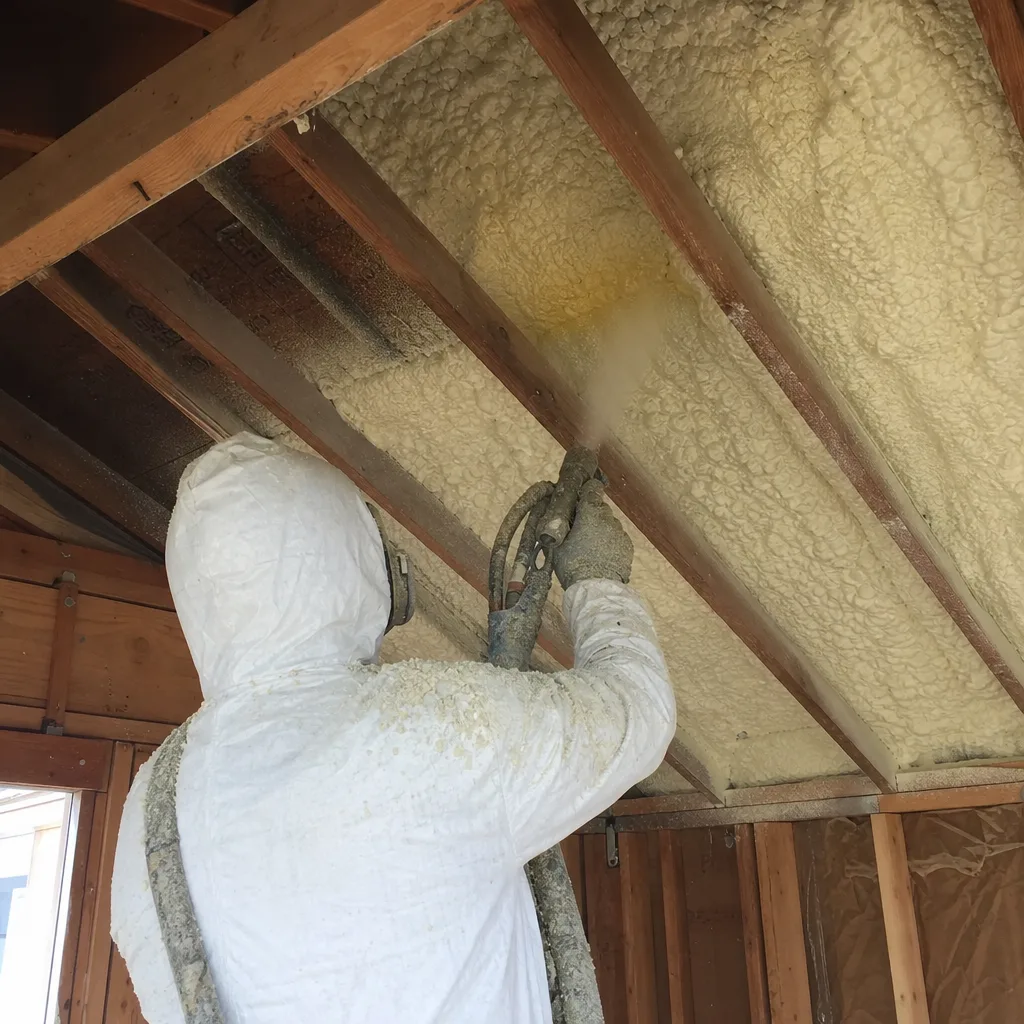
Spray Foam Insulation in March Air Force Base
Spray foam earns its place in March Air Force Base attics and kneewalls where air infiltration is the real enemy. The older tract homes around the base leak air through framing joints, duct chases, and can-light housings, and a layer of Icynene or Demilec foam seals those paths in a way blown fiberglass cannot. It’s the right material for low-slope attics with minimal venting, where traditional vented insulation assemblies don’t perform. Spray Foam Insulation in March Air Force Base covers open-cell versus closed-cell and where each makes sense here.
What happens when you call
- 1
A real person answersNo phone trees — you reach a local pro.
- 2
You get an upfront price rangeHonest numbers before anyone is dispatched.
- 3
A background-checked tech heads outLicensed & insured, dispatched right away.
- 4
You approve before work beginsNothing starts until you say go.
Blown In Insulation in March Air Force Base
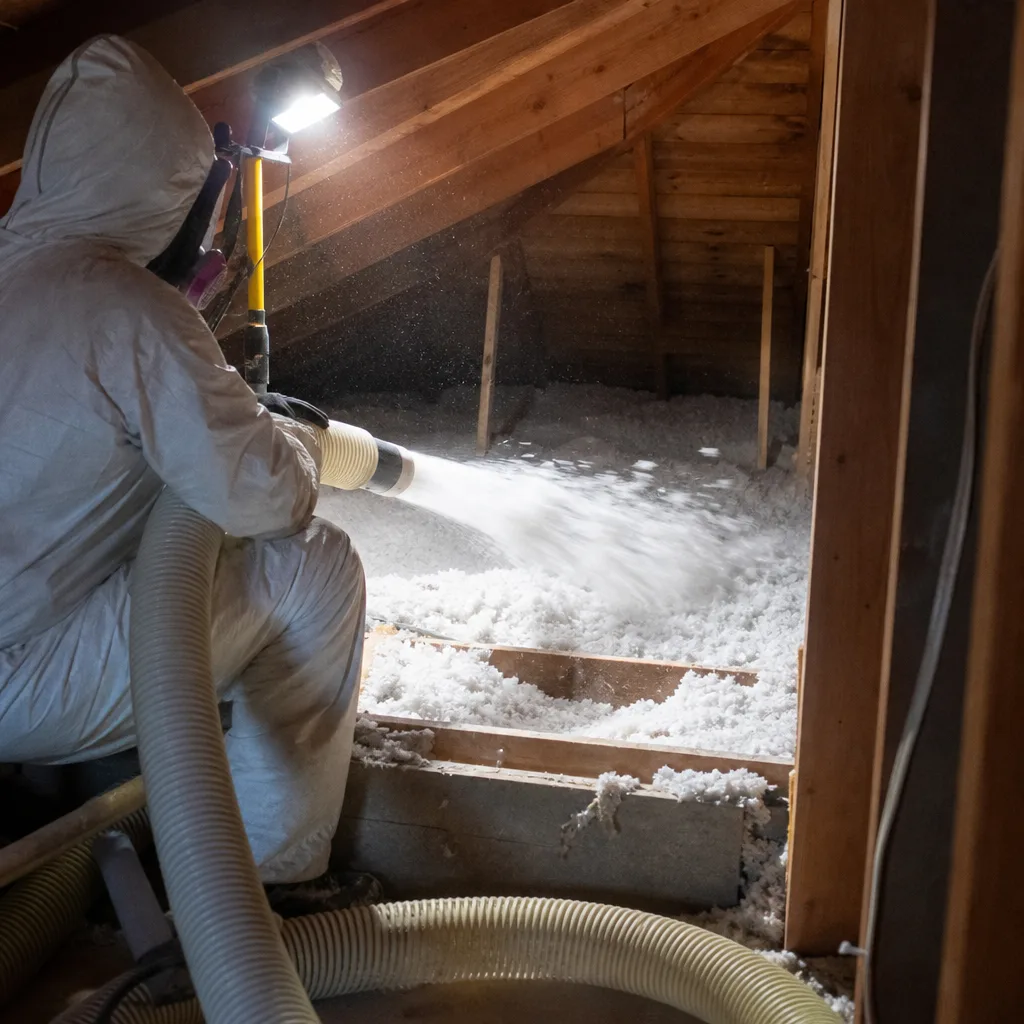
Blown in insulation is the most practical attic upgrade for March Air Force Base homes built from the 1950s through the 1980s, because loose fill settles into every irregular joist bay, plumbing chase, and shallow eave that a rigid batt will not fit. The desert heat here degrades old fiberglass batts faster than coastal California sees, and the base-adjacent housing stock often has original material that’s now doing remarkably little. We blow in material to a consistent depth across the entire attic floor, eliminating the thin spots and gaps that show up as hot ceilings in upstairs bedrooms. For the full story on this method, see our dedicated Blown In Insulation page.
Cellulose Insulation
Signs you need it
Your attic insulation measures under R-30, or you can see the tops of the ceiling joists in a 1970s-era March Air Force Base tract home.
What it costs in March Air Force Base
Cellulose blow-in for a typical March Air Force Base attic runs $1.20 to $2.30 per square foot installed, depending on depth needed and access.
How we do it
We air-seal the ceiling penetrations first, then use a high-volume blower to cover the attic floor with GreenFiber cellulose to the specified R-value.
Blown In Fiberglass Insulation
Signs you need it
Your current batts are brown, paper-faced, and brittle, with gaps around recessed lights and truss webs that leave dark, heat-leaking patches.
What it costs in March Air Force Base
Blown in fiberglass typically lands between $1.00 and $2.10 per square foot in March Air Force Base, before any old-insulation removal.
How we do it
We remove or level failed material, then blow CertainTeed fiberglass evenly across the attic floor to full depth and verify coverage with a depth gauge.
What Blown In Insulation Costs in March Air Force Base
| Item | Typical range in March Air Force Base |
|---|---|
| Loose fill removal & prep | $0.80 – $1.50 / sq ft |
| Cellulose blow-in (R-38) | $1.20 – $2.30 / sq ft |
| Fiberglass blow-in (R-38) | $1.00 – $2.10 / sq ft |
Is blown in insulation worth it in March Air Force Base?
Yes, for most 1950s – 1980s homes here. An attic topped to R-38 with cellulose or fiberglass cuts ceiling heat transfer measurably, and the material cost is modest compared to a full spray foam job. Call (877) 265-5712 for a straight assessment.
Can you blow insulation over old batts in March Air Force Base?
Often, yes, if the old batts are dry and not packed with rodent droppings or dust. We’ll inspect first and tell you whether removal is worth the added cost in your attic.
Brands We Service in March Air Force Base
We stock and install CertainTeed and GreenFiber on most March Air Force Base blow-in jobs, and we carry the full foam lineup from Icynene and Demilec for spray foam work. Our local supply runs mean common attic materials are on hand within days, not weeks. See our brands for the complete list.
Pricing for Insulation Company in March Air Force Base, CA
| Service | Typical range in March Air Force Base |
|---|---|
| Attic insulation inspection | $0 (free estimate) |
| Blown in fiberglass (R-38) | $1.00 – $2.10 / sq ft |
| Blown in cellulose (R-38) | $1.20 – $2.30 / sq ft |
| Loose fill removal & disposal | $0.80 – $1.50 / sq ft |
| Spray foam, open-cell (roofline) | $1.50 – $3.00 / sq ft |
| Spray foam, closed-cell (roofline) | $2.25 – $4.50 / sq ft |
| Attic air sealing (with insulation) | $0.50 – $1.25 / sq ft |
| Crawl space rim joist sealing | $10 – $20 / linear ft |
March Air Force Base pricing runs on the higher end when the attic has low clearance, heavy old-insulation buildup, or rodent damage that requires removal before new material goes down. Every job is quoted upfront with no buried line items, so the number we give you is the number you pay.
Neighborhoods We Serve in March Air Force Base
We work throughout the 92551 ZIP and the base-adjacent neighborhoods, including:
- Arnold Heights
- Base housing off Graeber Street
- Tract homes near Riverside Drive
- The subdivisions east of the flight line
We schedule most March Air Force Base insulation jobs within a few business days, and inspections are free with no obligation.
Service Area – Cities Near March Air Force Base
North Tustin Insulation also serves the surrounding Inland Empire communities, including Moreno Valley, CA, Woodcrest, CA, Perris, CA, and Good Hope, CA. If you’re just outside the base area, call us; our crews move between these cities weekly.
Serving March Air Force Base, CA — Our Local Coverage Area
We’re based in the March Air Force Base area and know this community well. Use the map below to see our service coverage — if you’re nearby, we can almost certainly help.
FAQs About Insulation Company in March Air Force Base
Most estimates are scheduled within two to four business days, and installs in March Air Force Base typically start within a week of the approved quote. Emergency attic work can sometimes be squeezed sooner. Call (877) 265-5712 to check current scheduling.
If you live in base-managed housing, yes, coordinate with the housing office before any attic modification. We’re familiar with the process and can provide the material specs and scope description your housing office needs to sign off.
For this climate zone, R-38 is the practical minimum for blown-in attic insulation, with R-49 recommended where attic depth allows. Shallow attics common in 1950s – 1970s base-adjacent homes may cap out at R-38; we’ll tell you what your framing can actually hold.
If your March Air Force Base home runs hot upstairs, your attic insulation is the first place to look. Call North Tustin Insulation at (877) 265-5712 for a free estimate and an honest recommendation based on your attic, your roof pitch, and your budget. We match the material to your home, not the other way around.
What happens when you call
- 1A real person answersNo phone trees — talk to a local insulation pro.
- 2You get an upfront price rangeHonest numbers before anyone is dispatched. No surprises.
- 3A background-checked tech heads outLicensed & insured, typically same-day.
- 4You approve before work beginsNothing starts until you say go.
What March Air Force Base Customers Say
"Installed baffles at the soffits so the new insulation didn't block the ventilation, which the previous contractor apparently never considered."
— Ryan Rhodes"Spray foam in the rim joists in the basement. The cold floors above them are gone."
— Bethany Ziegler"He did a blower door test before and after and gave me the numbers. I like being able to see the difference rather than being told about it."
— Nathan Padgett