Reflectix Insulation in March Air Force Base, CA | North Tustin Insulation
We provide independent Reflectix radiant-barrier installation and repair across March Air Force Base, and we’re one of the few contractors in the area who’ll tell you straight: a Reflectix roll stapled flat to a roof deck without an air gap isn’t doing much. That’s the single most common issue we correct in the 92551 ZIP, where mid-century base-adjacent housing leaves little room for proper air space. If you’re dealing with a hot attic, delaminating foil, or dust-caked barrier that stopped reflecting years ago, call us at (877) 265-5712 for a free estimate.
Why March Air Force Base Residents Choose Us for Reflectix Service
Allen Decker grew up in Cowan Heights, where he learned early that a house without proper insulation is just an expensive oven. That lesson stuck, and it’s why he’s never been one to sell Reflectix as a miracle product. It works when it’s installed right, with the air gap the manufacturer specifies, and it fails quietly when it isn’t. We’ve worked Reflectix radiant barrier into hundreds of Inland Empire attics, from Reflectix in Moreno Valley to base-adjacent March ARB housing where the attic envelope is original 1950s through 1980s builder work. We’re not authorized, sponsored, or endorsed by Reflectix. We’re an independent insulation contractor that knows the product line, its air-gap requirements, and exactly how it degrades under Riverside County heat.
We carry Reflectix Double Reflective Insulation Roll, Single Reflective Foil, perforated radiant barrier variants, and Reflectix-brand foil tape. We also work with Reflectix sales & service expertise across the full product range, and we pair barrier work with attic insulation top-ups when the batting underneath is compressed or thin. That’s the difference between a contractor who slaps foil on a roof deck and one who understands what’s actually happening in your attic.
Common Reflectix Insulation Problems We Solve in March Air Force Base
Here’s what we find when we open up attics around March Air Force Base, and why each issue matters here specifically:
- Foil stapled flush with no air gap. The single most common Reflectix failure in March Air Force Base. Mid-century base housing and nearby tract homes often have shallow, low-slope attics where installers stapled the barrier directly to the roof sheathing. Without that half-inch to three-quarter-inch air space, radiant heat conducts straight through the foil into the attic. It becomes a shiny heat conductor instead of a reflector.
- Delaminated, chalky foil after decades of heat cycling. Summer temperatures in this inland basin routinely exceed 100°F, and attics can hit 140°F or higher. Over decades, the adhesive bond between the foil face and bubble core breaks down. The reflective surface flakes and dulls, and the barrier quietly stops doing its job. We see this constantly in original 1960s and 1970s base-adjacent housing.
- Dust and grit coating the reflective face. Many of the older homes in the 92551 ZIP rely on small gable-only vents rather than full ridge-and-soffit systems. Airborne dust pulled through those undersized openings settles on the foil surface and kills reflectivity. A dusty radiant barrier reflects about as well as a dusty mirror. We see this a lot in attic spaces that haven’t been cleaned since the original install.
- Compressed, sagging original batts under the barrier. A Reflectix barrier concentrates its value as a radiant heat shield, but it doesn’t provide meaningful conductive insulation. When the fiberglass underneath has been walked on, heat-cycled, and compressed to half its original loft, hot attic air bypasses the foil entirely and heats the ceiling below. The barrier gets blamed, but the real problem is the dead insulation under it.
- Gaps and seams taped with generic foil tape. We see barrier seams that were originally sealed with off-brand tape that cracked and peeled after a few inland summers. Reflectix-brand foil tape holds up better to the heat cycling here, and resealing those seams properly restores a surprising amount of performance.
Reflectix Service in March Air Force Base: What Local Conditions Mean for Your Equipment
Here’s something specific to March Air Force Base that you won’t find on a generic Reflectix page. Base-adjacent housing in this ZIP is subject to the base’s own energy and housing-maintenance guidelines, not just civilian Title 24. That means when we scope a radiant-barrier upgrade for a family in base housing, we have to account for what the housing office requires and what the original mid-century construction allows. It’s a double review that doesn’t exist in surrounding Riverside County cities. We’ve worked this process before, and we know what the housing maintenance teams look for: proper clearance, vent compliance, and installation methods that don’t compromise the original roof structure. If you’re in March ARB housing and wondering whether you need sign-off before work begins, the answer is usually yes for radiant-barrier or attic insulation changes. Call us and we’ll help you figure out the right sequence so you’re not redoing work.
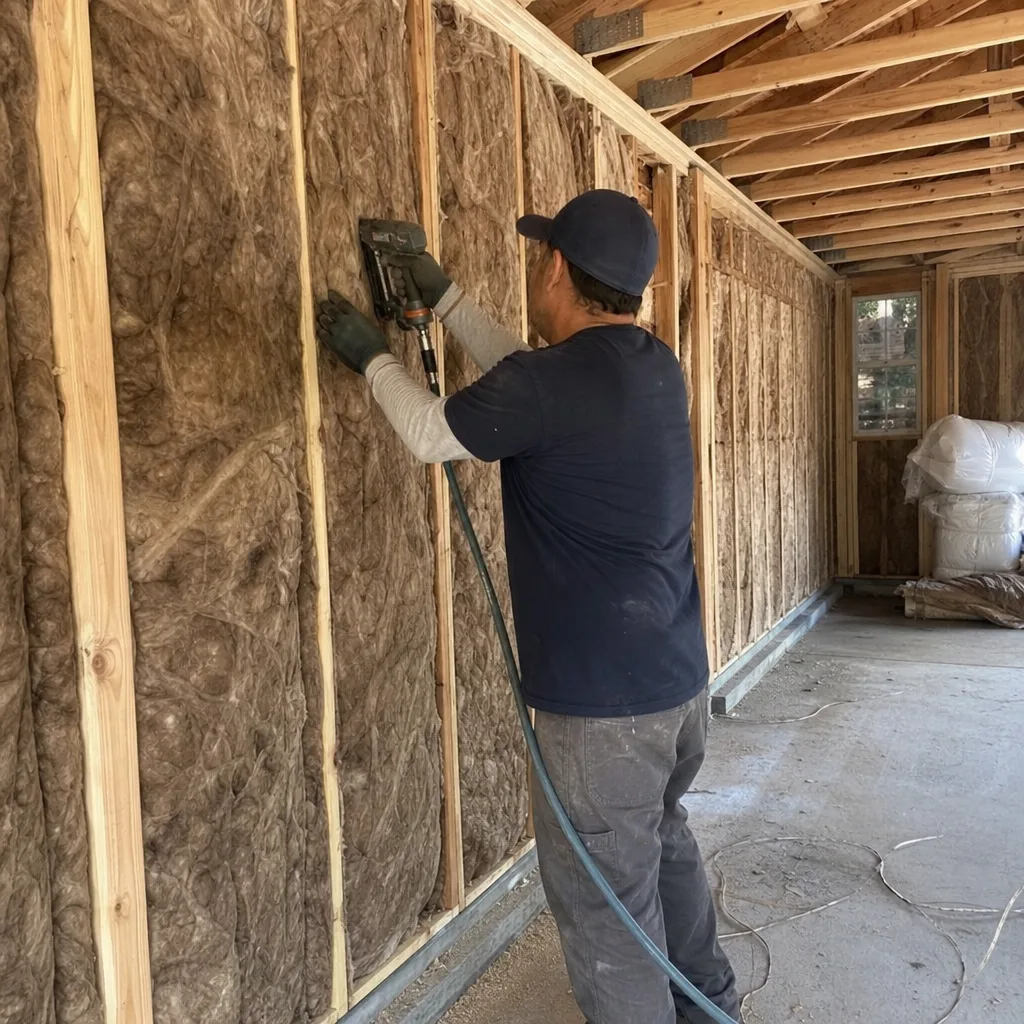
One job stands out from a mid-century base-adjacent home in the 92551 ZIP. Our crew found the original Reflectix-style foil stapled flat against a shallow, low-slope roof deck with no air space, foil face chalky and delaminating after decades of 100°F-plus summers. We pulled the failed barrier, re-established a proper air gap with baffles and vent prep at the small gable and soffit openings, then installed fresh Reflectix radiant barrier on the roof deck and topped up the compressed original batts underneath. The attic came down off its heat soak, and the upstairs rooms stopped cooking by mid-afternoon.
Reflectix Models & Products We Service in March Air Force Base
We work with the full Reflectix product line that matters for attic and roof-deck applications. That includes the Double Reflective Insulation Roll with bubble core, which is the standard staple-up barrier for attic deck and rafter use. We also install Single Reflective Foil as a facing layer where a lighter product fits the application, and we’re experienced with perforated radiant barrier variants used on attic floors and deck applications. When it comes to seaming and edge sealing, we spec Reflectix-brand foil tape rather than generic foil, because the adhesive and facing hold up better to inland heat cycling. Where an existing barrier is delaminated or dust-fouled, we replace rather than patch. And where the attic is under-insulated, we pair the barrier with an insulation top-up instead of selling foil as a standalone fix. As Allen puts it: “If you can’t name the product and the R-value, you don’t have a quote, you have a guess.”
Reflectix Service Pricing in March Air Force Base
What you’ll pay for Reflectix work in March Air Force Base depends on three things: the square footage of the attic surface, whether we’re working with a simple flat deck or a shallow low-slope space that makes access tight, and whether the job also calls for underlayment top-up. Here’s a realistic range:
- Radiant barrier inspection and assessment: $125 – $250, credited toward the job if you proceed.
- Reflectix radiant barrier install, simple attic deck (per square foot): $1.80 – $3.20 installed.
- Shallow or low-slope attic barrier work (per square foot): $2.50 – $4.50 installed, reflecting the slower access.
- Seam resealing with Reflectix-brand tape (per linear foot): $1.50 – $3.00.
- Attic insulation top-up paired with barrier (per square foot): $1.25 – $2.75 depending on material and target R-value.
- Full attic scope (barrier plus top-up, typical 1,200 sq. ft. attic): $3,200 – $6,800.
Every estimate is free, and we walk you through the attic with a light so you can see what we’re seeing. Call (877) 265-5712 for an exact quote on your March Air Force Base attic.
Serving March Air Force Base, CA — Our Local Coverage Area
We’re based in the March Air Force Base area and know this community well, with coverage extending to nearby areas like Woodcrest Reflectix service. Use the map below to see our full service coverage — if you’re nearby, we can almost certainly help.
FAQs – Reflectix Insulation in March Air Force Base
Yes, in most cases. Base-adjacent March ARB housing falls under the base’s own energy and housing-maintenance guidelines, which operate separately from civilian Title 24. We recommend contacting your housing office before any radiant-barrier or attic insulation work begins. We’ve worked through this process with residents and can tell you what documentation or approvals your specific housing assignment requires. Call (877) 265-5712 and we’ll help you get the sequence right.
The most common reason is that the foil was stapled flush against the roof sheathing without an air gap, so it never worked correctly in the first place. The second most common reason is delamination: decades of 100°F-plus attic summers break down the adhesive between the foil and the bubble core, and the reflective face goes chalky and dull. Dust buildup from undersized gable-only venting makes it worse. When we inspect, we can tell you which failure you’re dealing with and whether replacement is the right call.
No. A radiant barrier reduces radiant heat gain, but it doesn’t provide conductive insulation. If the batts underneath are compressed, thin, or missing entirely, the attic will still heat up and transfer that heat to the rooms below. In March Air Force Base’s inland heat — and in surrounding communities like Reflectix repair in Perris — we almost always pair Reflectix with an attic insulation top-up. That combination is what actually lowers ceiling temperatures. Call (877) 265-5712 for a free attic assessment and we’ll show you exactly what your attic needs.
Yes, but the installation has to account for the limited airflow. When ventilation is undersized, we focus on establishing the air gap properly with baffles and making sure the small vent openings aren’t blocked by insulation or debris. We may also recommend adding venting, but even without it, a properly gapped radiant barrier will reduce heat load. The key is not stapling the foil flat against the deck, which is what happens in most of the failed installs we see in the 92551 ZIP.
Most barrier repairs and resealing jobs run between $250 and $600. A full replacement on a typical 1,200-square-foot attic runs $2,500 to $5,500, and pairing it with a top-up pushes the total to $3,200 to $6,800. Your estimate is free, and we’ll show you the attic conditions that drive the price before you commit. Call (877) 265-5712 for an exact quote.
Service Areas Near March Air Force Base
We serve March Air Force Base and the surrounding Inland Empire communities. If you’re in North Tustin, Tustin, Villa Park, Orange, Santa Ana, or Irvine, we cover those areas too. You can also see our March Air Force Base service area page for full coverage details, or check our Reflectix service in South Pasadena and Reflectix service in Torrance pages if you’re closer to those areas.
Book Your Reflectix Service in March Air Force Base Today
If your attic is cooking, your barrier is delaminated, or you just want someone to look at what’s under the foil, call (877) 265-5712. We schedule free estimates across March Air Force Base and nearby areas like Reflectix in Good Hope, and we can often get a crew out within a few days. Allen and the team will walk you through the attic, show you what’s working and what isn’t, and give you a straight answer.
Written by Allen Decker, Owner at North Tustin Insulation, serving March Air Force Base and the Inland Empire.